
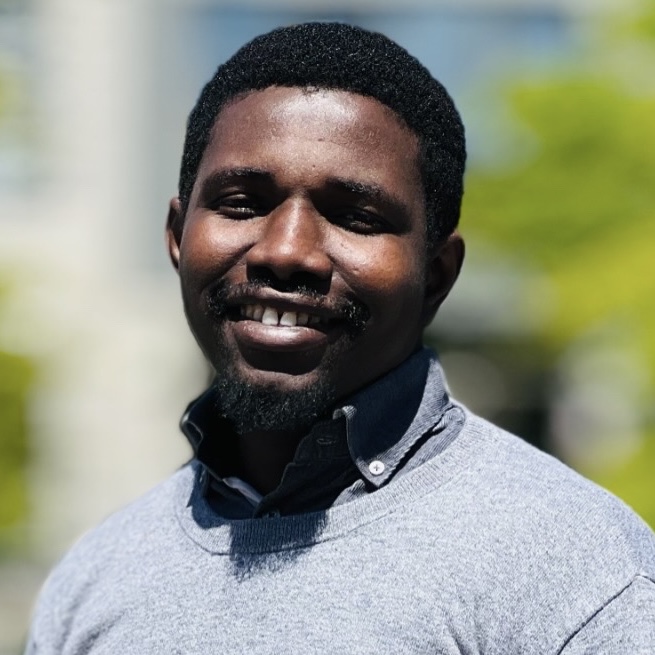
By OLASUNKANMI AROWOLO
I have been thinking about this question not simply because I have read a recent study on Nigerian newsroom hiring practices, but because I have spent years watching journalism students move through the classroom and attempt to make sense of a profession that is changing faster than the systems designed to prepare them for it.
The problem, as I see it, is not that journalism students are unwilling to learn. It is that we are often asking them to prepare for a professional world that has already changed by the time the curriculum designed to prepare them reaches the classroom.
A recent study by Kemi Busari, published in Journalism, provides an important empirical basis for this conversation. Drawing on interviews with newsroom editors and an analysis of job advertisements, the study examines what Nigerian news organisations actually prioritise when hiring reporters. Its findings suggest that the journalism degree matters, but it is not the only thing that matters. That should not surprise us. The more difficult question is this: what exactly should a journalism degree certify in 2026?
When the curriculum is already behind…
One of the central problems with journalism education is not necessarily what is being taught, but the length of time it takes to decide what should be taught. This matters because curriculum reform is usually slow. A new curriculum often begins as an attempt to respond to an emerging professional reality. It is proposed, debated, reviewed, revised and eventually approved before it can be implemented. Students are then admitted, taught, assessed and graduated. By the time that full cycle is complete, the professional environment may already have moved much further ahead.
The Core Curriculum Minimum Academic Standards (CCMAS) provides a useful example. Introduced by Nigeria’s National Universities Commission, CCMAS was designed to standardise undergraduate degree programmes across Nigerian universities and to replace the older Benchmark Minimum Academic Standards (BMAS). Yet, like any national curriculum framework, it has to pass through formal processes of consultation, debate and approval before it reaches the classroom.
The difficulty is that the news industry does not wait for these processes to catch up. Artificial intelligence is a useful example. It is already reshaping reporting, verification, editing, audience engagement and newsroom workflows, yet it has no clear place in the present CCMAS. The result is that journalism education risks playing catch-up with a profession whose skills, tools and expectations are changing in real time. Journalism does not wait.
The answer is not simple; it is neither to throw away curricular every year nor to chase every technological trend. Journalism still need their foundational theories (especially decolonisation of theories, and/or adaptation of relevant theories in our context), foundations in reporting. It needs history in context (not just dates in the head to fill in the gaps and multiple-choice questions) the same principle applies to ethics, law, political economy and critical thinking student-led learning activities.
Here is the problem. The problem is what happens when theory is disconnected from the environment in which journalism is actually practised. In other words, the problem is the distance between those foundations and the environment in which journalism is actually practised. One possible way forward is to make curriculum renewal a continuing process rather than an occasional exercise. The current curriculum allows up to 30% autonomy, which is a very good start if the school truly set up actively working committee to do the real work. Greater autonomy for institutions to review and update the local component of their programmes more frequently could help narrow the distance between formal curriculum approval and the realities of professional practice. If the world changes faster than the approval cycle, some part of the curriculum must be capable of changing with it.
Journalism cannot be taught in a vacuum
Teaching journalism in Nigeria cannot simply mean teaching students how journalism works in an abstract sense. It must also confront the conditions under which Nigerian journalism operates.
A practical journalism exercise can teach a student how to write a story. But what happens when the story involves a politically connected source? What happens when the information cannot easily be independently verified? What happens when the journalist is covering insecurity in a region where physical access is dangerous? What happens when economic pressures influence editorial decisions? What happens when a story that appears straightforward becomes entangled with political interests, ethnic tensions, misinformation or online manipulation? These are not peripheral questions. They are part of the practice of journalism. This is one of the gaps I have observed among journalism students and recent graduates. The challenge is not simply that many are insufficiently practical. It is that the practical training they receive is sometimes insufficiently situated within the realities of the society in which they will practise.
We need to ask whether we are teaching students merely how to produce journalism, or whether we are teaching them how to make sound editorial decisions in the difficult conditions in which journalism has to be produced. That distinction matters.
Every generation inherits a different newsroom
Another lesson my students have taught me is that journalism education cannot remain static while the generation being educated changes. A Gen Z student does not necessarily think, communicate, learn or consume information in exactly the same way as a millennial. The generation that follows Gen Z will bring another set of habits and technological assumptions. Think about teaching the TikTok logic, just as my friend and colleague, Damilola Oduolowu, proposed at the Future of Journalism Conference in Cardiff 2024. We see this logic in practice on Washington Post social media. Go search it up on TikTok, you will see the power of repurpose for audience – meeting the audience where they are.
This does not mean that journalism’s fundamental principles should change every few years. Accuracy remains accuracy. Verification remains essential. Accountability matters. Ethical judgement remains indispensable. But the ways in which we teach these principles must evolve. We cannot keep preparing each generation to practise journalism under the conditions experienced by the previous generation.
The question for journalism educators should therefore not simply be, “What should journalists know?” It should also be, “How should this generation of journalists learn to know it?” That is a different question. We need to be honest about what universities can deliver.
There is also a difficult conversation universities themselves need to have. Higher education institutions sometimes present programmes in terms of what they aspire to provide rather than what they can consistently deliver. We speak about industry relevance, innovation, digital transformation and employability. But the real test is not what appears in a prospectus or programme document. It is what the student actually encounters. If a university does not have the facilities, equipment, staff, partnerships or institutional capacity required to deliver a particular form of journalism education, there should be greater honesty about that limitation.
There is nothing inherently wrong with acknowledging institutional limits. There is something problematic about allowing students to graduate without those students knowing how far their education has prepared them for professional practice. Universities also need to become better at listening to what happens to graduates after they leave. Up till this time, I wonder what the Alumni Association are actually doing. I wondered what I paid for when I paid for the Alumni Association due. No communication, not update; just ceremonials.
We measure enrolment. We measure completion. We measure examination performance. We count graduates. But what happens next? Do graduates enter journalism? This is not an entirely new idea. Accreditation systems in the United States, for example, already consider elements such as curriculum quality, facilities, faculty capacity, learning outcomes and evidence of programme effectiveness. There is a lesson here for Nigerian journalism education: quality assurance should not end with asking whether a programme has been approved. It should also ask whether the programme is producing the outcomes it claims to produce. These questions are not limited to journalism education; we could apply same to other field of study. Ask: Are they able to perform effectively? What do employers say about them? Which skills were missing? Which aspects of the curriculum proved valuable? Which did not? A meaningful feedback loop should connect curriculum, teaching, assessment, graduation, employment and employer feedback. The Alumni network could possibly fill a big gap here – this will be a big asset for the university. A pipeline for useful statistics for University Global Ranking.
Back to my domain, Journalism. If a journalism course repeatedly produces graduates who struggle with a particular professional competency, that should become evidence for curriculum review. The graduate should not be the endpoint of quality assurance. The graduate’s performance in the professional environment should become part of the evidence used to assess whether the programme is working. But newsrooms cannot outsource professional formation to universities. The responsibility, however, cannot rest entirely with universities. There is a danger in assuming that a journalism graduate should arrive at a newsroom as a finished journalist. A novel platform, Transitive, is well positioned to help with this. The platform is building a space where learning, growth, and preparation become visible. It is an ecosystem where there are coaches who develop students, companies discover them as they build career that actually reflects what they can do.
A degree should provide a foundation. Professional practice should deepen that foundation. News organisations have their own responsibility to train, mentor and develop journalists. If employers know that graduates arrive with certain gaps, then structured onboarding, mentorship, internships and continuous professional development should be part of the industry’s response. The newsroom should not expect the university to manufacture the finished journalist. But universities should not pretend that their work is complete simply because a student has graduated. The relationship should be complementary.
The experience paradox
There is another problem that young journalists know particularly well: the experience paradox. Employers want experience. Graduates need employment to acquire experience, and universities are often expected to somehow bridge the gap.
This creates the familiar problem of an “entry-level” position that asks applicants to possess several years of experience. Where is that experience supposed to come from?
Student journalism should count for something. University newsrooms should count for something. Internships, freelance reporting, multimedia projects, investigations and credible portfolios should count for something.
A graduate should not necessarily have to wait until employment begins before being allowed to demonstrate professional competence. This is where journalism education can do more. Students should graduate with evidence of what they can do, not simply evidence of what they have studied.
A portfolio cannot replace knowledge. But it can demonstrate how knowledge has been converted into practice.
So, do we actually need a journalism degree?
This brings us to the more controversial question. Should Nigeria require a journalism degree to practise journalism? I value journalism education. I believe formal education can provide students with important foundations in reporting, ethics, law, media institutions, research and critical thinking. But I am increasingly uncomfortable with the assumption that possessing a journalism degree automatically makes someone more capable of practising journalism than someone who has developed competence through experience.
Consider two candidates. Candidate A has a journalism degree, a strong academic record but limited practical experience and a weak portfolio. Candidate B does not have a journalism degree but has demonstrated an ability to find stories, cultivate sources, verify information, understand the reporting process and produce high-quality journalism with minimal legal and ethical problems. If I were hiring, I would want to know what both candidates can actually do. The degree would be relevant. But it would not be the only evidence. A qualification demonstrates that someone has completed a programme of study. It does not, by itself, demonstrate that the person knows how to find a story, cultivate a source, verify information, make an editorial decision, manage risk, understand the law or produce journalism under pressure. This is why I would rather see journalism employers ask both questions: What did you study? And What can you do?
The profession needs both knowledge and competence. The journalist we should be preparing. If I were hiring a reporter today, I would look for flexibility, adaptability, creativity and professional and ethical judgement, alongside the practical knowledge required to do the job.
The journalist entering a contemporary newsroom cannot simply be a good writer. The journalist may need to understand digital publishing, multimedia production, data, verification, audience behaviour, social platforms and emerging technologies. Increasingly, journalists also need to understand how artificial intelligence can be used responsibly within their work.
I do not see AI simply as a threat to journalism education. AI can help journalists and researchers structure ideas, interrogate possibilities, develop plans and organise complex tasks. When used properly, it can become a thinking and planning support technology rather than a substitute for thinking. But precisely because machines can increasingly generate and organise information, human judgement becomes even more important. The future journalist needs to know not only how to use a tool, but when to trust it, when to question it and when not to use it.
The fundamental question therefore remains human: What is true, how do we know, and what responsibility do we have for publishing it? That is where journalism education still has enormous value.
Beyond the degree
The solution, therefore, is not to choose between degrees and skills, or between universities and newsrooms. It is to connect them without allowing one to substitute for the other. Universities need to make journalism education more responsive, more honest about their capacity and more closely connected to professional realities. News organisations need to invest in professional development rather than expecting universities to deliver finished journalists.
Students need to recognise that a degree is a foundation, not a substitute for building competence, experience and a professional portfolio. On the other hand, journalism educators need to keep asking whether what we teach reflects the generation in front of us and the newsroom waiting for them. If journalism education in Nigeria gets this right, the journalist entering a newsroom in 2030 should be more than employable.
The journalist should be fit for purpose. Fit to navigate technology without surrendering judgement. Fit to report in complex political, economic and security environments. Fit to understand the society being covered rather than simply reproduce its events. Fit to question power while maintaining professional ethics and accuracy. Fit to contribute to democratic accountability and national development. Fit to facilitate the difficult relationship between our aspirations and our truths.
So, what is a journalism degree worth if newsrooms want more? My answer is that it should be worth more than the certificate. It should represent a foundation of knowledge, judgement, ethics and practical capability. But for that to happen, universities have to change. Newsrooms have to change. Journalism educators have to become more honest about the distance between what we teach and what the profession demands. The goal should not be to produce graduates who merely qualify for journalism. It should be to produce journalists equipped to practise, question and ultimately improve the profession they enter. The goal should be to produce journalists who are ready for journalism.
*Olasunkanmi Arowolo, PhD (University of Kent), teaches journalism and media at the Faculty of Communication and Media Studies, Lagos State University, Nigeria.
READ ALSO:
Troops neutralise 40 terrorists, foil attacks, recover weapons
Good morning, Tony, By Lanre Ogundipe
101-year-old woman arrested as NDLEA intercepts cocaine in ‘fufu’
St. Gregory’s College ’96 set donates power facility to science block
Wapa market fire: Fire fighters save N400m property
Dispatch rider dies in Lagos multiple road accident