

By AYODEJI ARANSIOLA
Every Nigerian has an opinion about the National Youth Service Corps (NYSC). Bring it up in a barber’s shop in Kano, a restaurant in Enugu, or a WhatsApp group of old classmates in Lagos, and the conversation almost always turns passionate. Some would insist the scheme has outlived its usefulness and should be scrapped. Others would defend it fiercely as one of the few institutions still binding the country together. In between would be quieter, more persistent worries: about security, about welfare, about deployment, about whether a compulsory year of service still equips young graduates for the world they are about to enter.
None of this is new. Since 1973, every generation of Nigerians has, in its own way, asked the same question: should the NYSC design remain static, or should it change with the country it serves? Now, 53 years later, the debate seems to be ending with the firm decision of the federal government for a comprehensive reform of the scheme.
The framework for the latest reform effort, driven by the administration of President Bola Ahmed Tinubu, was last week ratified by the the Federal Executive Council. This framework was, however, not built by the government behind closed doors. It came through months of deliberate talking with and listening to Nigerians from different walks of life.
The story began with a series of quiet but searching conversations about what NYSC was really for months before any recommendation ever reached the council chambers, Was its relevant and operational structure still fit for purpose? Did the way corps members get deployed still make sense for a country trying to build its economy sector by sector? Were corps members safe? Could national service become something more like a genuine platform for skills, productivity and youth empowerment, rather than a formality to be endured?
These were not questions that could be answered from behind a desk. Providing effecive answers to these probing matters demanded intensive research, technical reviews, and structured engagements with the very people whose lives the scheme touches every year. This philosophy of engagement would come to define the work of the NYSC Reform Committee and set this reform effort apart from those that came before it.
That philosophy took formal shape on 6 May 2025, when the Federal Government inaugurated the NYSC Reform Committee. The Committee had a clear mandate: undertake a comprehensive review of the scheme, identify its structural and operational gaps, and propose reforms that would reposition it for the future – all without losing its role as a symbol of national unity.
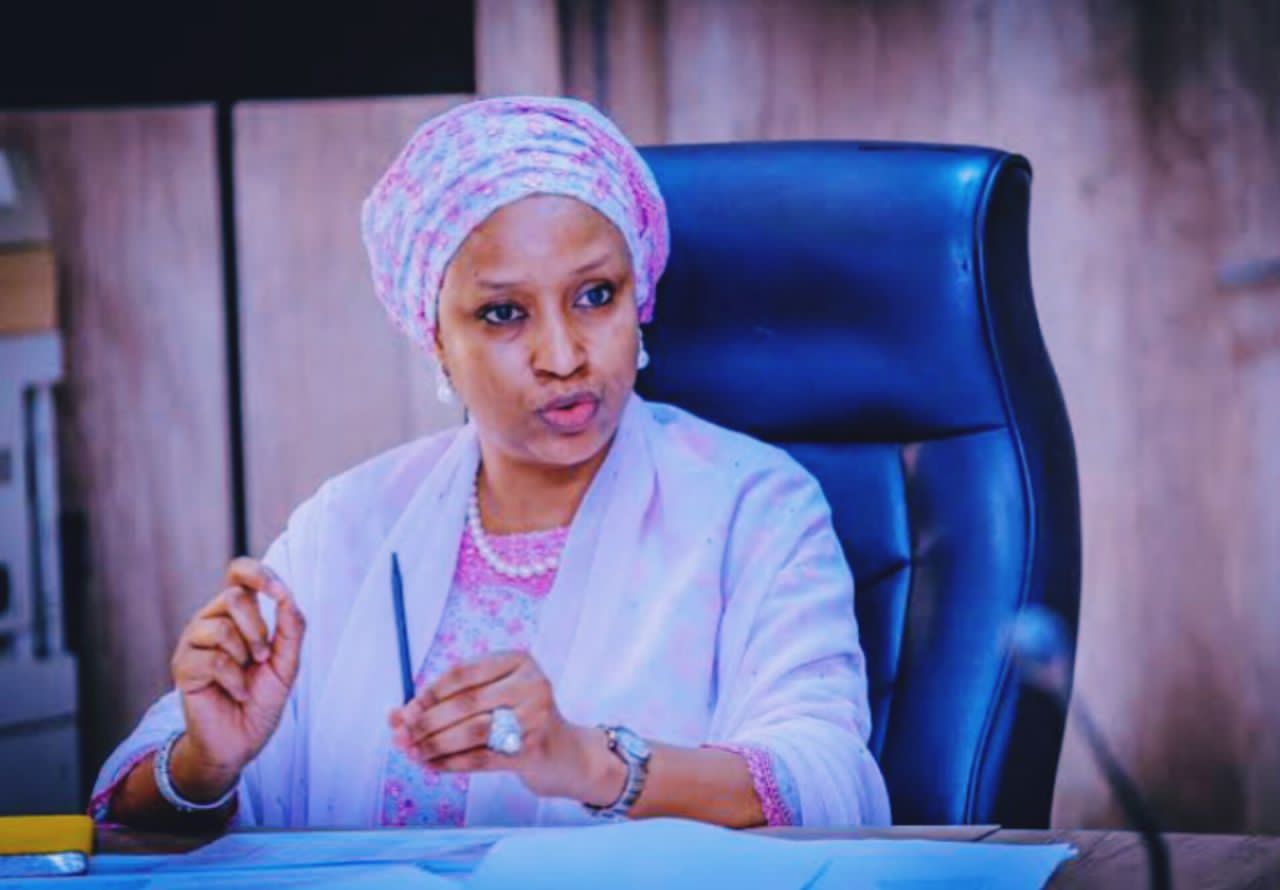
Drawing from the Office of the Special Adviser to the President on Policy and Coordination, the Federal Ministry of Youth Development, and the Federal Ministry of Education, the committee was coordinated by the Special Adviser to the President on Policy and Coordination, Hadiza Bala Usman. From its first meeting, one principle stood above every other: reform could not be built on assumptions. It had to be built on evidence, on listening, and on inclusion.
Work started with an unflinching look inward. Every part of the scheme, from its legal framework and governance structure to its operational systems, funding, deployment processes, welfare provisions and institutional capacity, was placed under the microscope in structured working sessions. Specialised technical teams carried out organisational diagnostics, legal and policy reviews, and stakeholder mapping, while comparative research drew lessons from how other countries run their own national service models.
But numbers and frameworks could only tell part of the story. As the review deepened, it became clear that the people who lived the NYSC experience were the ones holding the other half of the answer: corps members, employers, parents, and communities.
So, the committee went looking for those voices. Over a period of two months, a nationwide online survey collected the thoughts of 10,320 Nigerian respondents ranging from serving corps members, former corps members, parents, guardians, employers, and members of the public. The results were telling. 85 percent of respondents affirmed that the NYSC still mattered, but they were just as clear about its problems: concerns about safety, transparency, welfare, and how well the scheme still matched the economic realities young Nigerians face. More than 85 percent wanted something specific too, a shift toward deployment built around skills, particularly focused on agriculture, education, healthcare, and technology. Nigerians, it turned out, did not want the NYSC gone. They wanted it to work smarter for them.
That message shaped what came next. On 8 December 2025, the committee convened a Stakeholders Consultative Forum to test the emerging proposals in the open, in front of everyone with a stake in the outcome. Government institutions, the Nigerian Governors Forum, the NYSC itself, National Information Technology Development Agency, the Nigerian Economic Summit Group, development partners, civil society, academia, youth groups, employers, parents, and serving corps members all had a seat at the table. Across sessions on governance, financing, digital transformation, deployment, welfare, and post service opportunities, ideas were argued over, refined, and gradually shaped into consensus.
None of this came easily. Committee members gave long hours, rigorous analysis, and by their own account, more than a few sleepless nights, in pursuit of a reform framework that could stand up to scrutiny.
What emerged was not a cosmetic update, but a fundamental redesign. At the heart of the new framework are specialised service streams covering technology, education, medicine, agriculture, etc. TechCorp, EduCorp, MediCorp, AgriCorp and GreenCorp, all built to match national service with national development priorities, better aligned with the academic backgrounds corps members have. Alongside these sit stronger welfare systems, tighter safety measures, digital transformation, more transparent governance, and clearer pathways from service into meaningful employment.
At its core, the real goal of this reform is not merely to alter the structure of the NYSC, but to reposition national service as a genuine bridge between the classroom and the workplace. For too long, the scheme had been criticised as a one-year formality with little bearing on a corps member’s future career. The introduction of TechCorp, EduCorp, MediCorp, AgriCorp and GreenCorp is a deliberate bet: that a service year built around practical skills relevant to industry can do more for a young graduate than a certificate ever could. In essence, the reform is meant to turn the NYSC from a symbolic rite of passage into a functional pipeline, one that prepares young Nigerians not just to complete national service, but to thrive in the economy that follows it, whether as employees, entrepreneurs, or innovators.
That ambition matters more today than it might have been a few years ago. In May 2026, the Chief Executive Office of Moniepoint, one of Nigeria’s leading fintech companies, Mr. Tosin Eniolorunda set off a national conversation when he revealed that his company had hundreds of job vacancies it simply could not fill, not for lack of applicants, but for lack of candidates with the practical skills that meet global standards. The remarks were contentious, but they reopened a conversation Nigerians know well: that youth unemployment is not only a story about too few jobs, but also about the persistent gap between what graduates know and what employers need. This is precisely where the NYSC reform finds its deeper relevance. By moving corps members out of generic, often idle postings and into structured deployment built around real sectors of the economy, the scheme is being repositioned to do something it was never quite built to do before: prepare corps members for the market they are about to enter. Rather than simply fulfilling a national service requirement, corps members will increasingly graduate from the scheme carrying competencies that employers like Moniepoint say they are struggling to find, making the reformed NYSC as much a workforce readiness programme as it is an act of national service.
All the musings, technical reviews and collation and analysis of consultations culminated on 29 June 2026, when the Federal Executive Council, led by President Bola Ahmed Tinubu GCFR, gave its approval to the NYSC Reform Framework. It was a milestone, not an ending: the moment when a year of sustained evidence, argument, and consultation finally became government policy.
What happens next will be the real test, and it will not look like the reform’s most visible moments. Before any corps member enters a specialised stream, the scheme’s backend must be rebuilt: the NYSC Act reviewed and amended, a Director General and Executive Directors appointed, the scheme restructured internally, camps brought up to a minimum standard, and leadership put in place across the streams. This is the unglamorous work of institution building, and it will take the time it takes.
The Office of the Special Adviser to the President on Policy and Coordination remains committed to seeing it through precisely because a reform built on consensus, deserves a foundation as solid as its ambition. If the NYSC’s founders wanted a scheme that could unite Nigeria, this generation’s reformers want one that can also equip it: one corps member, one skill, one deployment at a time, once that foundation is in place to carry them.
*Aransiola is of the communications unit at the Office of the Special Adviser to the President on Policy and Coordination. He writes from Abuja, Nigeria.
READ ALSO:
Lagos removes illegal structures in Iju-Ishaga enforcement
Police neutralise two suspected kidnappers, rescue victim in Ogun
WEATHER FORECAST: NiMet predicts cloudy, rain atmosphere
EXTRA: My song of gratitude – July 9, By Lanre Ogundipe
Shell recognised for landmark achievements at NOG Energy Awards
Your guarantor signature cannot send you to prison
Osun 2026: Oyebamiji visits family of slain APC loyalist, accident victims in Ede
Ogun guber: Yewa leaders, youths, others endorse PDP candidate, Adebutu
Journalist’s death: Witnesses to testify as autopsy reports near completion
Windstorm kills seven, affects 5,403 residents in Jigawa
MUSWEN congratulates Fajimite on election as MULAN president
SUPERNEWS @10: Expert seeks stronger oil, insurance alliance to deepen local content