

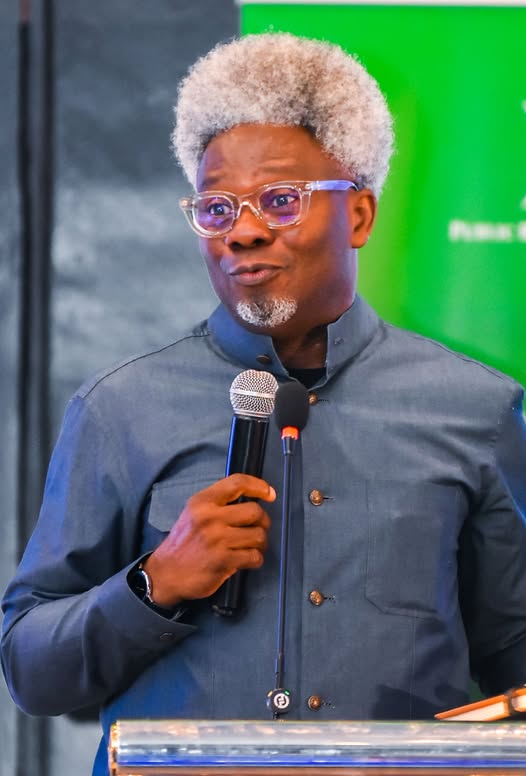
By OMONIYI IBIETAN
Although, I am not so knowledgeable about aviation, I know it’s a capital intensive venture.
So, I do not expect every state to own airport and airlines. Though states like Lagos can actually have an additional airport on the Island and it will be sustainable. Just like having a regional airline for the South East and South South geopolitical zones looks sustainable. The story of Overland Airways is telling about how airlines can create a regional niche. Another fantastic story I particularly revel is Ibom Air. May it grow in leaps and bounds.
However, I write about this today because it’s increasingly becoming a trend for states to build airports or float airlines, sometimes with just one or two aircrafts. I expect states to go into partnerships, float one good and sustainable airline based on a realistic business model. Collaboration, cooperation and strategic partnerships are new languages of success, growth and prosperity.
I mean, we need feasibility studies, a listening ear and thoughtful brains and minds to take appropriate investment decisions. That is what civilisation means and that is a metric of leadership.
So, with a good management, in structure and personnel, five states or more can come together to float an airline and spread the cost, while each of the states’ capital becomes a hub for the airline. Because, indeed, it will be a wastage, ultimately, if every state owns an airline with only one or two aircrafts and all of them collapse due to poor business decisions that are not sustainable. So, it’s good to have a good foundation for money-gulping investments like aviation and by my reckoning, if 10 states have objective grounds to establish an airline, it will be a bold statement starting with 10 or more aircrafts in the fleet and having enough capital for overheads, recurrent expenditures and so on to make it a going concern.
I remember when one of the private airlines started operation in one of the state capitals in the North, the state government had an agreement with the airline to subsidise the operation by paying for certain numbers of empty seats each time the airline flew into the state.
That decision, ostensibly, was to encourage the airline to keep flying that route. For me, it made no sense. If you have a need to charter flights for certain occasions you do so, not to subsidise flights continuously on a route that’s not profitable economically or commercially. What’s the strategic business interest or investment objective to that state government to have a periodic flight subsidised? May be someone needs to educate me.
I hope this new fad of airports and airlines is not a new manifestation of our ostrichism. Are we running away from travelling by road because of security concerns? Can’t we fix our roads and rails as the Federal Government is fairly doing at the moment, then invest more in security and make travelling by rail and roads, even by water, more appealing? I mean, majority of us, for a variety of reasons cannot fly each time we need to travel.
Do we remember what happened to Gbadolite Airport, at Mobutu Seseseko’s place, in Congo Kinshasa (DRC), where he built an airport and put planes on the route at the height of his misrule? Because I haven’t been to DRC in a long time, I enquire from synthetic intelligence what the state of the Airport is. Here’s the response: “Gbadolite Airport (BDT) is not well-utilised and operates far below its original capacity. Originally built with a massive runway for the Concorde to serve President Mobutu’s, it now only handles a few small commercial flights per month, infrequent UN flights, or humanitarian cargo. Current State: The facility suffers from poor maintenance, with the runway frequently overgrown and terminal infrastructure in disrepair.” Constructing that airport was one of those political and megalomanic decisions our continental leaders made.
Any objective economist or management specialist would have told him that enterprise was an unnecessary investment. I mean, we need feasibility studies, a listening ear and thoughtful brains and minds to take appropriate investment decisions. That is what civilisation means and that is a metric of leadership. Civilisation started in Africa, we should stop inverting it.
READ ALSO:
Police foil bandit attacks, recover rifles, livestock in Katsina
Tinubu, Kagame agree to deepen bilateral relations
Efforts to address quality of service challenges on course -NCC
2027: Fubara breaks silence, speaks on membership of APC
Gavel International honoured with NASoW’s social impact award
What every Nigerian contributor should know about cooperative savings
NDSF: Olusola Teniola to chair 2026 forum
NDLEA intercepts N10.4bn Canadian Loud at Lagos port
False kidnapping: Police rescue medical doctor from mob attack
Tinubu pitches the Nigerian business case to the rest of Africa