
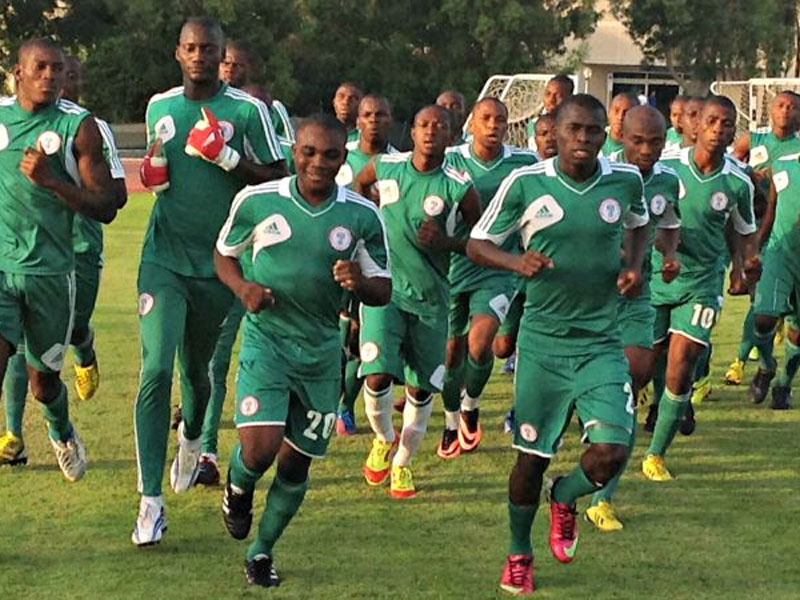
Nigeria’s Golden Eaglets have crashed out of the 2026 WAFU-B U-17 Championship following a 1-1 draw with Côte d’Ivoire, extending the country’s absence from the continental finals.
The elimination has raised fresh concerns about the state of youth football development in Nigeria, once a dominant force in age-grade competitions.
The Nigerian youngsters needed a victory against Côte d’Ivoire on Saturday to keep their qualification hopes alive but could only manage a draw in their decisive Group B encounter in Ouagadougou, Burkina Faso.
The result followed their 2-1 defeat to Niger in their opening match, leaving Nigeria without the points required to advance to the semi-finals.
Niger and Côte d’Ivoire progressed from the group, ending Nigeria’s hopes of qualifying for the 2027 U-17 Africa Cup of Nations, AFCON, in Morocco.
The latest setback also means the Golden Eaglets’ wait for a return to the FIFA U-17 World Cup will continue, having last featured at the global tournament in 2019.
Nigeria’s campaign began with a 2-1 defeat to Niger on October 14, with Abdoul Razaq Zada opening the scoring in the 19th minute before Abdoul Rakilou doubled the lead in the 86th minute.
Substitute Mubarak Fasiu pulled one goal back for Nigeria in stoppage time, but his effort could not prevent defeat.
The loss placed enormous pressure on the Golden Eaglets ahead of their final group fixture against Côte d’Ivoire.
Nigeria needed to convert that pressure into victory against the Ivorians but failed to do so, with the 1-1 draw ending their semi-final and continental qualification hopes.
The WAFU-B Championship serves as the qualifying pathway for the 2027 U-17 AFCON, making the elimination a major setback for another generation of Nigerian youngsters seeking continental exposure.
Nigeria’s record in youth football makes the latest failure particularly troubling, given the Golden Eaglets’ remarkable history at international level.
The team has won the FIFA U-17 World Cup a record five times, establishing Nigeria as one of the most successful countries in the competition’s history.
For decades, the Golden Eaglets provided a platform for young players to showcase their talents, gain international exposure and progress towards senior football.
However, that pedigree has failed to translate into consistent qualification for recent continental competitions.
Nigeria missed the 2023 U-17 AFCON after losing to Burkina Faso in the qualifying tournament’s quarter-finals.
The country also failed to qualify for the 2025 edition after losing 1-0 to Côte d’Ivoire in the WAFU-B semi-finals in 2024.
The latest elimination extends Nigeria’s absence from the continental finals and raises further questions about the effectiveness of its youth football development system.
The successive setbacks have intensified concerns about possible weaknesses in talent identification, coaching, preparation and long-term player development.
Stakeholders are expected to demand greater accountability and urgent reforms to restore the Golden Eaglets’ competitiveness and revive Nigeria’s standing in youth football.
Source: NAN
READ ALSO:
Troops rescue kidnapped victim, recover N10m ransom
Decoupling Sovereignty Index (3): Persona, exit and the ethics of going dark
Farewell to Dele Cole, distinguished diplomat, journalist –Tinubu
Tinubu’s campaign strategy and the unnecessary political storm
Ogun 2027: I never purchased guber nomination form, says alleged PDP aspirant
Lagos to host food systems transformation strategy review
Police in Oyo rescue baby allegedly sold by mother for N2m
Media Trust Group launches converged digital newsroom
Goodnight, Mobolade Omonijo – the gentleman of our newsroom
Adieu Mobolade Omonijo, a living library of Nigerian politics
INTIMATE AFFAIR: Wife scarcity: What will our young sons do now?
Troops overrun Lakurawa terrorists’ enclave, neutralise scores