
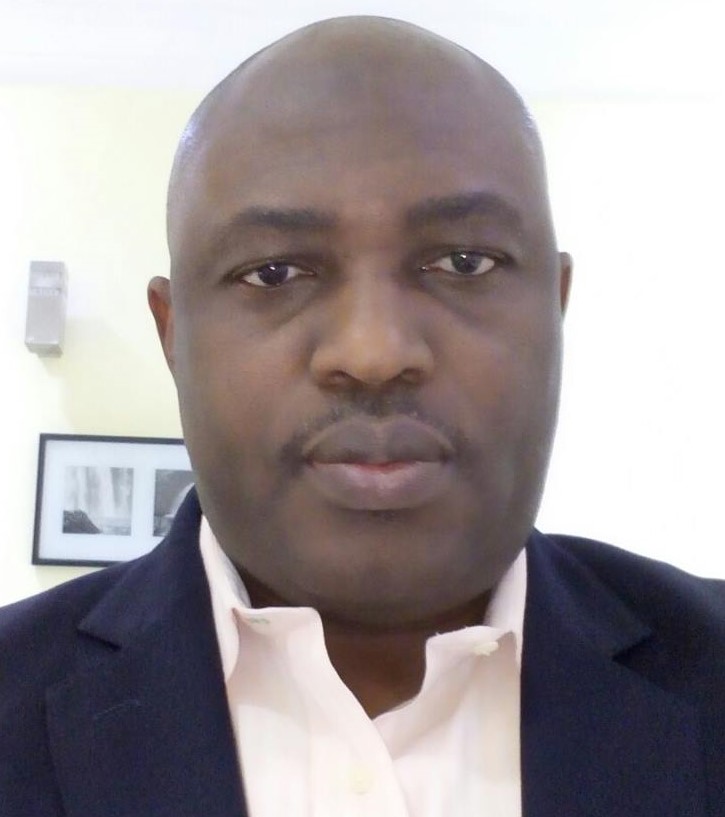
By OLABODE OPESEITAN
There are men who enter public office quietly, and there are men who arrive like a voltage surge. Joseph Olasunkanmi Tegbe belongs firmly to the latter category. As an administrator who stepped out of the polished corridors of KPMG Africa, where he rose to Senior Partner and one of the continent’s most respected advisory figures, Nigerians expected velocity. They expected competence. They expected a technocrat who would treat the power sector not as a ministry but as a battlefield.
They were right.
What they did not expect was the drama.
From the first week, Tegbe behaved like a man determined to bend a sluggish bureaucracy into a vehicle of national redemption. His calendar became a blur of commissioning ceremonies, grid upgrades, factory acceptance tests in China, rural electrification rollouts and high‑level engagements with governors, regulators, financiers and foreign partners. He moved with the intensity of a man who had seen the books, understood the rot and decided that hesitation was a luxury Nigeria could not afford.
Yet, in the same breath, Tegbe stumbled into blunders so jarring that they shook public confidence and handed his critics ammunition they had long prayed for.
This is the tension that defines him.
This is the story that must be told.
The Man Who Came Prepared
Tegbe’s corporate pedigree is not ornamental. It is structural. At KPMG Africa, he built a reputation for solving institutional problems with forensic clarity. He advised governments, multinationals and development institutions. He understood systems, incentives, governance and the mathematics of reform. When President Asiwaju Bola Ahmed Tinubu appointed him Minister of Power, the expectation was high: this man has all it takes to excel.
He confirmed that expectation immediately.
Within days, Tegbe announced a structured reform strategy anchored on execution discipline, clear milestones and public accountability. He met major agencies in the power ecosystem. He pushed for the revitalisation of dead plants including the 375 MW Alaoji power plant, energised new substations and expanded rural electrification. He commissioned mini‑grids across Kwara, Adamawa and Plateau. He broke ground on a new National Control Centre to replace a 64‑year‑old relic. He secured commitments from China’s TBEA to build a power‑equipment industrial park in Nigeria. He pressed Chinese partners to accelerate transmission projects that would unlock more than 2,000 MW of stranded capacity. He launched RAMCO to end the culture of commissioning assets only to watch them decay.
He told Nigerians plainly:
“Together, we are building a more aligned, investable and reliable power sector.”
He spoke repeatedly of electricity not as infrastructure but as destiny:
“Electricity is not merely about power. It is about people, possibility and progress.”
This was Tegbe at his best: strategic, disciplined, visionary.
But politics is not a corporate boardroom. Reform is not a seminar. And Nigeria’s power sector is not a place that forgives missteps.
The Masterstrokes
- The Decentralisation Doctrine
Tegbe embraced the Electricity Act 2023 with missionary zeal. He convened federal and state actors, regulators and legislators to build a coordinated implementation framework. He established a nine‑member inter‑agency committee to drive the transition to decentralised electricity markets.
He understood that Nigeria’s federal monopoly had become a bottleneck. His push for state regulatory capacity, joint technical committees and harmonisation platforms signalled a future where Lagos, Kaduna, Kano, Enugu and Port Harcourt could build their own electricity destinies.
- The 24/7 Energy Zones
In Lagos, standing beside Governor Sanwo‑Olu and his deputy, Tegbe declared a bold ambition:
“Our goal is clear: to work in synergy to deliver stable and reliable electricity to the Lagos corridor, as part of the 24/7 Energy Zones pilot approved by President Bola Tinubu.”
The pilot begins in Lagos and extends to the Abuja–Kaduna–Kano and Enugu–Port Harcourt corridors. A Joint Technical Committee will drive implementation, reporting to a Steering Committee chaired by the Governor and co‑chaired by Tegbe. It is one of the most ambitious reliability experiments in Nigeria’s electricity history.
- The Grid Renaissance
According to Tegbe himself, both generation and transmission crossed the 5,000 MW threshold over multiple weeks, rising far above the 3,700 MW to 4,700 MW ranges that defined the pre‑June 2026 era. Available generation hit 5,403.3 MW, with 4,379.07 MW allocated to distribution companies. The balance covered exempted loads, including station auxiliaries, transmission losses, international bilateral customers (exports) and eligible customers. That placed available generation within about 7 per cent of the all‑time peak of 5,801.84 MW, recorded in March 2025.
Targeted transformer and grid interventions unlocked 912 MW of additional transmission capacity. It was the clearest evidence yet that his identify‑the‑bottleneck, remove‑the‑constraint doctrine was working.
And in a sector accustomed to tariff shocks, Tegbe ruled out immediate increases, insisting that reliability must come before price adjustments as Nigeria moves toward a 24/7 supply.
- The Rural Revolution
Under his watch, rural electrification became economic strategy. Mini‑grids were no longer charity projects; they were engines of productivity. In Adamawa, 13.5 MW of clean energy began powering 40,000 households and 6,000 businesses. In Kwara, solar systems strengthened local economies. In Plateau, agro‑processing hubs emerged around renewable power.
- Powering Institutions, Not Just Communities
A striking example came at Yakubu Gowon University, Abuja, where Tegbe commissioned a 3 MW solar hybrid plant delivering reliable, cleaner electricity to 58,726 students and staff. The facility combines a 3.3 MWp solar array, 3 MW of AC output and 2 MWh of battery storage, backed by grid supply outside solar hours. With 388 new streetlights improving campus safety, the university has shed its dependence on diesel generators.
It is a model of how institutional electrification strengthens education, research and national capacity.
- The War Against Sabotage
For decades, sabotage has been the silent behemoth holding Nigeria down. Transmission towers felled in the night, high‑voltage lines cut, gas pipelines vandalised, insurgent attacks on critical corridors and consumer‑level theft ranging from meter bypassing to the notorious generator cabal. Previous administrations lamented these attacks. Tegbe chose confrontation.
This month, he convened the inaugural ministerial committee on the prevention of vandalism of power infrastructure, bringing together Homeland Security, ONSA, the NSCDC and every relevant agency. The outcome was decisive: enforce existing laws, prosecute offenders, deploy technology to protect national assets and use advocacy to prevent vandalism before it happens.
It was a clear break from the era of helpless lamentation. In a renewed drive, sabotage is being treated not as misfortune but as a crime against national development.
- The Industrial Pivot
His Beijing engagements were not photo opportunities. They were industrial policy. By pushing for local manufacturing of cables, transformers and energy equipment, Tegbe sought to end Nigeria’s dependence on imports and build indigenous capacity.
This was long‑term thinking. The kind Nigeria rarely sees.
The Missteps and Misreadings
- The Freezer Fiasco
In Abuja, during a speech meant to inspire confidence, Tegbe declared that electricity had improved so dramatically that Nigerians were begging him to slow down because their freezers were over‑freezing.
It was a catastrophic misread of national mood.
At a time when Nigerians were enduring blackouts and epileptic supply, the comment sounded insensitive. Arise TV tore into it. Social media erupted. Analysts called it tone deaf and out of touch.
It became the defining PR disaster of his early tenure.
- The Call Centre Controversy
Early in his tenure, Tegbe proposed a national electricity complaints call centre to speed up outage reporting and help track vandalism. The idea immediately drew strong pushback from economic and policy experts. Critics argued that the project did not align with Nigeria’s capital‑expenditure realities, noting that a former KPMG partner known for management discipline appeared to be backing a politically attractive but economically questionable initiative.
Others pointed out that Nigeria already has statutory bodies responsible for handling consumer complaints. Building a new federal structure, they argued, would add bureaucracy rather than strengthen existing institutions. Analysts also insisted that the Minister should focus on systemic challenges such as gas shortages, liquidity constraints and grid stability. Some commentators argued that Tegbe put “political desire above operational reality”.
Yet, in Europe and the United States, public institutions typically operate customer‑service lines. Public agencies in the US also routinely outsource citizen contact services, a model Nigeria could weigh against building a new federal structure.
Despite the criticism, official statements indicate that the government is still developing the direct‑reporting channels. The controversy was less about cancellation and more about whether the initiative reflects the right priorities for a sector under strain.
- The 100‑Day Grid Stabilisation Controversy
During his Senate screening, Tegbe was drawn into a media storm after newspapers reported that he promised to end national grid collapse in 100 days. Headlines amplified the claim and created the impression of a definitive pledge.
The transcripts show a more cautious statement. Tegbe said the first phase of stabilisation would begin within 100 days and that Nigerians would see visible improvement. His exact words were: “The first phase in the 100 days is to stabilise that grid. My promise to this hallowed chamber is that Nigerians will see visible improvement in this sector. If you don’t see this in 3 months, it means you won’t see it in 6 months.”
The Ministry quickly clarified that the headlines were a misrepresentation. His spokesperson explained that Tegbe did not promise a complete end to grid collapse within 100 days, only the start of stabilisation, while deeper structural issues would take longer to fix.
The episode became a lesson in how a measured commitment can be turned into a miracle promise once filtered through sensational reporting.
The Paradox of Tegbe
Joseph Tegbe is a paradox: a brilliant reformer capable of reshaping Nigeria’s power sector, yet prone to blunders that threaten to overshadow his achievements.
Many of his predecessors were mocked as olokunkun birimo-birimo, the men who anchored darkness. Tegbe now stands at a crossroads. Will he join that inglorious lineage, or will he become the first Minister of Power worthy of a new title: Onimole of Imoleland, the one who finally bears light?
This tension is what makes him fascinating. It is what makes him fallible. It is what makes his story worth telling.
The Verdict
Tegbe’s masterstrokes are undeniable. His blunders are unforgettable. But the scale of his ambition dwarfs both. He is attempting to fix a sector neglected for over five decades. He is trying to build a modern grid, decentralise electricity markets, expand renewable access, strengthen institutions and restore investor confidence.
He is fighting vandalism, energy theft, liquidity deficits and political sabotage. He is pushing transparency, market discipline and performance scorecards. He is building partnerships that stretch from Kano to Beijing.
He is doing all this while learning, sometimes painfully, that public communication is as important as policy execution.
In the end, Tegbe’s legacy will not be defined by freezers or headlines. It will be defined by whether his reforms endure, whether his industrial vision materialises and whether Nigerians finally experience the electricity he has promised with such conviction.
If he succeeds, his blunders will become footnotes.
If he fails, they will become prophecy.
For now, Joseph Tegbe remains what Nigeria rarely gets: a man who is both the architect of progress and the author of his own complications. A reformer with flaws. A technocrat with missteps. A minister whose story is still being written. The arrowhead President Tinubu has entrusted with the mandate to lift Nigeria into the circle of nations where even a momentary flicker in electricity supply is treated as an unacceptable failure.
READ ALSO:
FG reopens First Niger Bridge after 38 days
Police arrest three over alleged killings
EXTRA: An ode to Feyi Smith at 70, By Fred Chukwuelobe
Kidnapped Kaduna couple, six month old daughter regain freedom
Inflation drops to 14.63% in Sept –NBS
Many feared dead as petrol tanker explodes in Benin
The CBN’s rate reset: Easing with discipline, By Tope Fasoranti