The post Nigerian politicians and their jilted women, By Funke Egbemode appeared first on Frontpageng.
]]>Take the case of Afonja, an Aare Ona Kakanfo (Commander-in-Chief) of the Army of Oyo. An Aare was installed by the king to lead the army, defend the territory and do battles against the empire’s enemies. The families and compounds that produced the Aare were a long proven lineage of warriors. They were not royalty. The royal houses feed the throne in Yorubaland. But Afonja wanted to be king, I guess he got tired of taking instructions from a man who spent his days dressed regally and his nights in the bosoms of the most beautiful women in the land. Why should he, Afonja, spend his days dodging fiery arrows of death and his nights chanting non-stop incantations until his mouth was swollen while the king just flipped his irukere and a dozen slaves fanned him so he would not sweat under all the royal fineries?
So Afonja rebelled, and rebelling against an Alaafin was no small venture. Afonja knew what, or so he thought, was at stake. He went on a massive recruitment drive to expand his army, the one that would make him king. Using Ilorin as base, the rebel warrior organized what Toyin Falola (Ibadan: Foundation, Growth and Change 1830-1960) described as desultory wars in the northern part of Oyo Empire ‘to create the nucleus of a new kingdom.’ He incited Hausa slaves against their masters and recruited those who forcefully left their masters (we know what that means, right?) into his expanding army. Then he went into alliance with Alimi, a Muslim preacher who also had designs on Oyo deeply inside him. Alimi’s primary aim was Jihad and he must have seen the chaos Afonja’s war of rebellion was causing among his people as the pedestal he needed to enlarge his religion frontiers. That was how a rebel and a jihadist bonded against Oyo Empire.
Neither Alimi nor Afonja considered the collateral damage of their self-centered alliance. They did not care whose blood or pain would fuel their ambition. They were just big boys who wanted to be bigger boys. Their alliance did work, for a while. With the help of Alimi, Afonja was able to bring down the Alaafin, walking through the blood of his own people but did not allow him enjoy the kolanut of success for long. The pains of pregnant women who became sudden widows and the cries of babies who suffered hardship because they were born fatherless soon reached the ears of Eleduwa (the Supreme Being). There broke out confusion in the camp of the enemy and around 1823, the Islamic cleric killed the rebel.
According to Professor Toyin Falola, ‘Alimi was probably more ambitious than Afonja.’ He planned to carry the Jihad to Yorubaland and control a large expanse of the territory in the process. His army repeatedly set out from Ilorin to attack northern Oyo area which had already been weakened by previous invasions by Afonja. Between the bloody ambition of a rebel Commander-in-Chief who wanted Alaafin’s throne for himself and a pretend-pious man who also wanted to build his own empire, the Old Oyo Empire came to an inglorious end.
Ambition, blind ambition. Powerful men who want more powers. Like the popular Fuji artiste, King Wasiu Ayinde Marshal (KWAM 1) sang:
A ba so o
E de gba
K’a f’eniyan je lemomu
Ko tun ma du Seriki.
A chief Imam warned to be contented with his holy title but is determined to become a Sarkin (king) will not end well. That is the translation of those fuji lines, essentially.
READ ALSO: 2025 UTME: JAMB alleges foul play in result of highest scorer
Do you see it, ambition everywhere? Do you see them, ambitious men, everywhere? Ambition in itself is not a bad thing. It is just that in Nigeria, the self-centeredness quickly becomes selfishness and swiftly to blinding ambition. This new set of coalition figures should ordinarily bring us hope. At least now, we have an alternative to all the job seekers who call themselves politicians running into APC, the biggest recruiter today.
Today’s politicians? They are like an impotent man who brags that he would break the waist of his woman but at the end of the day could not rise to the occasion.
Ordinarily, that a group of politicians are volunteering to rescue us from poverty should gladden my heart but it doesn’t. One, I have heard all that they are saying before. Two, I have seen all of them in the same hall before. Three, the things they promised then are still the things they are promising now. I am confused. Isn’t this what they call gas-lighting? Or is it musical chair? The only redeeming feature of this coalition or collusion is that some of the faces of the coalition ahead of 2027 are men who gave a good account of themselves when they were helmsmen of their states. As governors, they built impressive schools, improved health facilities, gave impressive face-lifts to their state capitals. They left their states better than they met it. But as soon as they moved to federal level politics, the accolades started dwindling. People stopped clapping and now they are grumbling. The people are now looking at these once celebrated good men with suspicion. Some cannot even disguise their sneer. Because while the states improved a little under many former governors, too many things fell through the economic cracks.
Too many things have gone wrong. Too many promises have been broken. Too many oaths of office have been breached. Nigerians are feeling like abandoned brides, jilted women. A woman scorned more than once is not a woman you can toast easily. She no longer trusts any man. The man may think he broke only her hymen, no big deal. The deal is big, trust me. A woman robbed of a hymen and left with a broken heart is a woman to be feared. You and I can write a book on how hard she can be, mean and menacing. That is where Nigerians are. They have been taken to the altar too many times by men who did not keep their promises, men who heartlessly threw away the orange after sucking the juice.
A new coalition? It could work. Maybe it won’t. What is in it for the common man if it does? The ones that seemed to have worked, worked for who? It is a conversation, or questionnaire that leaves you exhausted because we have been at this game for so long, too long, even. Yet it is not how long a man stays on top of his wife that determines whether she will have twins or triplets. A two-minute man can impregnate his wife with quadruplets while the marathon man may end up with just one bouncing baby. Nigerian politicians have stayed too long on top of this wife with little or nothing to show for it. Yes, we can see the sweat. True, the mats and mattresses have suffered under their weight and huffing and puffing. But where are the babies? This wife is old and menopausal. That is why this coalition is not exciting. We have been tickled and tantalized before. This old wife has been left high and dry. She is tired and dry. And it did not have to be like this, old men behaving like teenage boys who are seeing a woman’s naked nipples for the first time. I can understand the wobbly knees and bulging eyes of a 15-year-old boy the first time he sees a woman in her birthday suit but a 70-year-old dazed and drooling at the sight of a woman’s body is embarrassing. What our leaders should have done swiftly at the first attempt is what is haunting them.
Chief Obafemi Awolowo was Premier Western Region between 1952 and 1959, less than eight years and he left such a great legacy that he is today, 66 years later, still a reference point. Alhaji Lateef Jakande was governor of Lagos State between 1979 and 1983 and no minute passes in Lagos that his name is not mentioned. Yes, you read that right. There are Jakande bus stops all over the state, not just for honourary reasons but because of Jakande Estates, affordable low cost housing estates across Lagos. Chief Bola Ige was governor of the Old Oyo state for just four years, 1979 to 1983, and his legacy in education is still a reference point. In four years, these leaders left names their children are not afraid to mention among talaka was Aminu Kano and Sardauna did their bit and became reverred ancestors before they died. Dr Nnamdi Azikwe did not have to relocate permanently into the boxing ring to become a champion.
Today’s politicians? They are like an impotent man who brags that he would break the waist of his woman but at the end of the day could not rise to the occasion. Do you think the next time he comes bragging again, the woman will be impressed? No, she will just yawn loud and long, hiss and roll into a deep sleep, snoring.
*Egbemode (egbemode3@gmail.com)
The post Nigerian politicians and their jilted women, By Funke Egbemode appeared first on Frontpageng.
]]>The post Obaship institution in Yorubaland: Discourse on ‘Ibadan royal award’ appeared first on Frontpageng.
]]>
The prestige of the cultural and traditional institution in Yorùbáland is one of the reasons why Yoruba traditional systems and values have attracted so much attention and admiration over the years. The institution commands nothing short of reverence. The legendary feats of Yorùbá Obas in times past have impacted oral history, with in-depth documentation of historical accomplishments; situated in the larger-than-life image of Yoruba kings, and the narrative surrounding royalty in Yorubaland. These Obas didn’t rule their domain as mere mortals, but like gods and custodians of the mythical. They wear dual crown: First as a King and as a father to all living; including the beings that inhabit the forest, the sea and extra- terrestrial sphere.
The royal father’s power is likened to that of the gods! Kabiyesi Oba alaase ekeji Orisa. This paean places the king on the same pedestal as the gods. Yet, the Oba is accountable to his people and the gods of the land. His primary duty is to develop his domain, as well as secure every aspect of the socio-cultural well-being of the land.
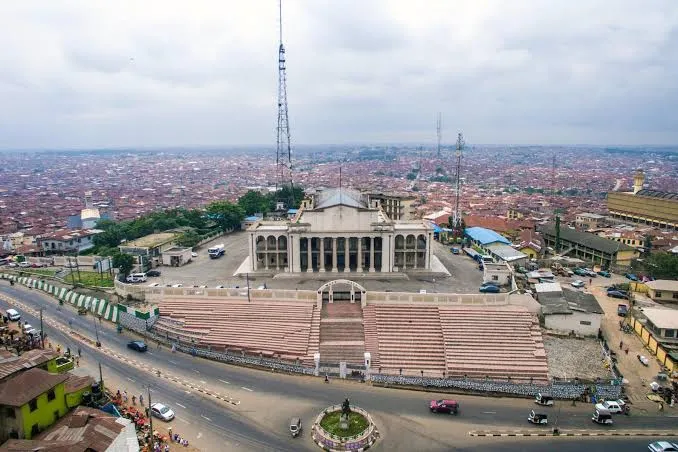
How is it that Ibadan – a renowned cosmopolitan town, described in the classic work of the iconic poet – JP Clark. Ibadan, as “a city of brown roofs” with many firsts in developmental strides – has suddenly lost its uniqueness and chosen to rewrite its history as “a city with plethora of crown-heads”?
The recent installation of new crown heads in Ibadan has set on motion, discourse on the mythology of ascendancy to the throne of Obaship in Yorubaland. This development deserves a thorough scrutiny and conversation on whether the age-long tradition should be preserved, reviewed or jettisoned for modernization. Roll back to history, the relegation of Alaafin Aole of the old Oyo Empire in 1817 by his war “General”, Afonja, dented the image of the Yoruba race, and caused serious upheaval in the land. It later plunged the Yorubas into a 16-year civil war, which became the longest civil-ethnic war in world history. This was known as the ‘Kiriji or the Ekitiparapo’ War. This implies that the future of our culture and heritage, as a people, rests on the shoulders of the traditional rulers and the institutions around them. As guardians of culture, they are the first and last line of defence against foreign infiltration and expropriation. But over the years, the cultural milieu of the Yoruba nation has not been as vibrant and elegant as it used to be. Infiltration and dilutions in so many ways have caused people to abandon their culture. Most of the traditional values and morals laid down by our forefathers have been jettisoned for western and modern ways of life, which have eroded our strong traditional values.
It is safe to assume that royal Institutions in Yorubaland have been compromised and messed up because of the urge to amass wealth and gain affluence. What we are witnessing, is as result of political influence in the selection or appointment of candidates for the stool and the urge to unduly regulate traditional institutions, in order to curtail their powers. The embarrassing cheapened award of chieftaincy titles and general breakdown of law and order cum moral decadence in Yoruba land, calls for urgent attention and resolution. A Yorùbá adage says, “An elder doesn’t sit in the market place and watch the head of a newborn get twisted”. The worth and weight of Obaship in Yorùbá land is more than just the throne. Situating this in a correct perspective, calls for proper education on Yoruba culture and the importance of its preservation.
It is not an issue that some local errant chiefs were elevated. The crux of the matter, is that the upgrading must be seen to have been carried out in line with the tradition that confers such authority on the prescribed officer whose duty is to bestow such honour. In this case, the award leaves much to be desired. It questions the suitability and moral capital of those who have assumed the role of custodians of our traditions and culture. Sadly, what is being witnessed now by the younger generation is a perversion of the customs and traditions they’re to preserve. And for this reason, we would not keep mute, watching without crying blue murder of our culture.
It is not an assumption that royalty and politics are like oil and blood; the two don’t mix well and should not be allowed in any union whatsoever. It is on this ground that everything must be done to preserve Yoruba culture and heritage. This applies to the right positioning of the Obaship in the entire Yorubaland. In our country where history no longer feature in academic curriculum, it’s the duty of the Obaship and traditional leaders to ensure that our culture, morals and heritage are preserved and nurtured while the empowerment of youths to ensure peace; and the protection of lives and property in the community, should rest on the shoulders of the one who is considered as the “second in command to the gods”. Here we are – the ‘Alase Ikeji orisa’ is no longer serving a collective interest but personal. He’s too shortsighted to acknowledge that the fate of his people lies so much in his leadership, and that societal progress and development, depends on his preservation of its history, culture inclusive of its arts. The richness of the Yorùbá culture and heritage connects the world just as the Atlantic connects diverse countries. Its level of wealth is multi-layered, hence, it must be protected at all cost and the role of the Oba and traditional institutions in delivering this duty is important. And at the same time, our collective responsibility is to ensure that our cultural heritage, including arts, must be preserved, not forgetting that every son and daughter of this iconic race, must strive to be good ambassadors of the Yorubas, reputed as the most sophisticated, among the black African race. The institutions should not just care about traditional issues, it should look inward and see how the land can be developed socio-culturally, morally, economically, and in every way possible.
Let me drop a note of caution – the beginning of the end of dynasties and civilizations often starts when social decay seeps into the leadership of a people – in this case, the elevation of young pliable chiefs into kingship, without understanding the onerous responsibility that accompanies the authority invested in them. This Yoruba proverb becomes apt here: “An extended or large family enjoys peace so long as the illegitimate children in it, have not grown up.” It appears as if the illegitimate offsprings in the land, are now on stage to wreak havoc on our cherished cultural values.
READ ALSO: The looming religious crisis in Ilorin, By Kazeem Akintunde
How is it that Ibadan – a renowned cosmopolitan town, described in the classic work of the iconic poet – JP Clark. Ibadan, as “a city of brown roofs” with many firsts in developmental strides – has suddenly lost its uniqueness and chosen to rewrite its history as “a city with plethora of crown-heads”? Yet, one thing stands out of the exercise – the installation. This cannot be overlooked as the promoters of this exercise; are well aware that this abnormality cannot continue. It would surely be undone, in no distant time. The truism that power is transient is unfurling. The disturbing issue is: are the promoters ready for the consequences when they unfold? Would the hush tones in the background be sufficient to quench the smoking flax when it engulfs? I know danger lurks. Societal pushback to the subterfuge among the Obas in Ibadanland is imminent, it’s a matter of time before it unfolds.
The misnomer notwithstanding, some of the promoted Baales are indeed due for the exalted office because of the positions they occupied in Ibadan history and as such, the Olubadan reserves the right to dispense justice by way of according them their rightful place in history. However, the ‘dandawi process’ ought to have been sorted out; rather than the lumping, which paved way for the enthronement of the likes of Onijaiye, Oniroko, Alakufo, Lalupon, Erunmu, Ido and few others. Of what benefit have those that were dashed crowns, been to Ibadan?
An Oba crown represents the highest level of authority vested in a King, and thus referred to as Adé. The bead-embroided crown is the foremost symbol of a Yoruba King and the greatest mark of honour and sanction of divine authority. By these petty crownings, the myth surrounding the institution is being broken. The supposed ” ikeji-orisanla” is being laid bare and stripped of honour. I have said repeatedly that “Korimagbofo cap ” otherwise known as ‘Ade-paali ‘ is not the same as Ade-Isembaye. The sacred groove called Ipebi serene atmosphere where the ancients reside, has been jettisoned for street parades. Obas are now subject to reading of oaths and written in Western languages to the detriment of the ‘alales vows’ – ancestors ordinances. All ipebi observatory rules and injunctions are traded off because of few, on ego trip!
This piece would not be completed without having a word for those parading as socialites among the so-called chiefs. They need to watch their steps. How much of Ibadan history were they exposed to? If they’re well-grounded as they claimed, they ought to know they’re pawns in a chess game, and at the appropriate time, they’d be shown where they belong.
Wearing of a beaded crown or Ade in the literary sense of it, has to be defined ONLINE? with the status of each of the Oba and not just the award and the uniformity. In so doing, not only would the second class Oba display superiority to the lesser one? Adé ńlá, literally “Big Crown”, is an elaborate conical head gears that feature a heavily beaded veil and fringes that shields or obscure the face. The other category is the Akoro – the smaller coronets worn by regional rulers under the suzerainty of a paramount authority and a more powerful Oba, who were essentially vassals under the Emperor of an empire. The titles of Looja and Baale are two titles that are known to wear Akoro in Yorubaland rather than an Ade which they do not have the right to wear. In the real sense, the crown incarnates the intuition of royal ancestral force, the revelation of great moral insight in the person of the king, and the aura of aesthetic experience.
Obaship is a choice and nobody is forced against his wishes to become one. However, when you make your choice, it must be with full understanding that Obaship is not only about flamboyancy and access to wealth, but the spiritual, cultural and political leadership of the land. But what do we say to the new Ibadan oriki ‘panegyric’ being crafted: omo Onigba-Oba ti ndade, ti o mo ko to orun ileke – ko lo nle, ko’dowo, omo onile booji – offspring of the two hundred crown heads, who know not the undeserving neck for the necklace. And thus, before our very eyes Ibadan Ilu Olokiki is now ‘Ibadan Onigba-Oba ma wo-ipebi’ Ibadan a city with two hundred headcrowns without traditional values – a downturn trend no one ever imagined.
This piece would not be completed without having a word for those parading as socialites among the so-called chiefs. They need to watch their steps. How much of Ibadan history were they exposed to? If they’re well-grounded as they claimed, they ought to know they’re pawns in a chess game, and at the appropriate time, they’d be shown where they belong. A word is enough for the wise
*Ogundipe is former president of the Nigeria Union of Journalists
The post Obaship institution in Yorubaland: Discourse on ‘Ibadan royal award’ appeared first on Frontpageng.
]]>