
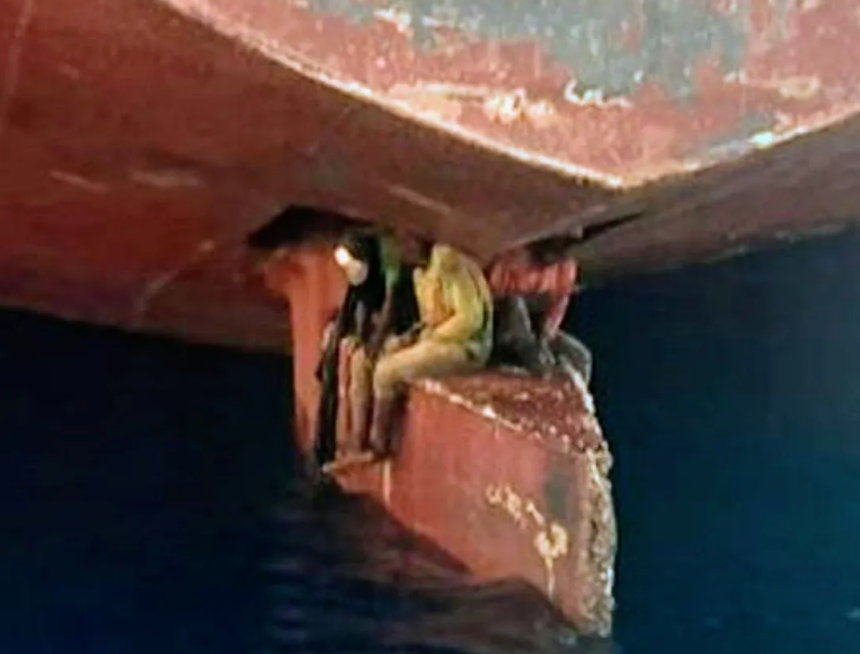


The Commissioner of Police, Port Authority Police Western Command, Mrs Toyin Agbaminoja, has said the command recorded five stowaway cases and prosecuted 20 suspects at Lagos Magistrates’ Courts between April and August 2026.
Agbaminoja, represented by Deputy Commissioner of Police Salihu Jimoh, disclosed this at the Nigerian Ports Consultative Council, NPCC, quarterly meeting in Lagos on Thursday.
The meeting had the theme: “Simplifying Cross-Border Trade and Enhancing Ease of Doing Business at Our Ports.”
A stowaway is an unauthorised person who hides aboard a ship or within cargo without the knowledge or consent of the ship owner or master.
Agbaminoja said five stowaway cases involving 20 suspects were charged, including cases handled in collaboration with the Nigeria Immigration Service and Nigerian Navy.
She said the command also recorded six stealing cases and one case of false pretence, which were awaiting trial in court.
The commissioner described the Port Authority Police as a specialised unit responsible for enforcing the law, protecting lives and property, and securing critical infrastructure within the ports.
She said the command also maintained order, prevented crime through intelligence gathering, protected cargo and conducted marine policing within port waterways to facilitate seamless trade.
Agbaminoja identified inadequate patrol vehicles as one of the challenges facing the command, noting that only two divisions had vehicles, which were already old.
She also cited the lack of modern gunboats for marine operations and inadequate accommodation as challenges affecting effective policing and trade facilitation.
Similarly, the Nigeria Immigration Service, Lagos Seaports/Marine Command, cleared 1,118 arriving vessels carrying 24,378 crew members between April and August.
The command also cleared 969 departing vessels with 21,942 crew members within the period.
Comptroller Clementina Ogbudu said the command recorded 25 stowaway suspects, comprising three Ghanaians, one Beninese and one Cameroonian.
Ogbudu, represented by Officer Adeyemi Ibitoye, attributed the arrests to joint efforts with the Nigerian Navy Ship, NNS, Beecroft, which enhanced maritime security patrols in Lagos.
She identified inadequate office accommodation at Bakassi, Apapa, and the absence of a screening centre for suspects as major challenges.
Ogbudu also cited the lack of intelligence officers at port gates and the need for government allocation of agency buildings and a detention facility.
In his contribution, Capt. Iheanacho Ebubeogu queried the ban on night fishing, saying it threatened the livelihoods of fishermen.
Ebubeogu said a ship could cost 50,000 dollars daily and argued that night fishing remained important to food security.
He proposed a stakeholders’ meeting for the following Thursday involving shipping companies, marine and port police, and other stakeholders along the Trinity, Tin Can and corridor areas.
He said the meeting would help address extortion and ensure smooth cargo movement.
The Chief Executive Officer of Ocean Deep Services Ltd., Mrs Rollens Macfoy, commended police collaboration with port facility security officers.
Macfoy, however, urged authorities to include fishermen, whom she described as legitimate stakeholders, in future meetings to develop more effective solutions.
A clearing agent and Managing Director of Ocean Blocks, Mr Awonuga Oluwole, complained about multiple stoppages after customs clearance.
Oluwole said containers were sometimes delayed for two to three days while being moved to warehouses, thereby hampering the ease of doing business.
Mrs Blessing Emeka of Cosco Shipping also complained that maritime police still issued letters blocking shipments.
The Apapa Port Manager, Mr Debo Lawal, represented by Mr Kaumr Bakar, said the Nigerian Ports Authority, NPA, had convened a meeting to resolve the issue.
He said it was agreed that the police should not block containers inside or outside the ports.
A representative of the Nigerian Ports Economic Regulatory Agency, NPERA, Mr Jajere, said the agency was appointed interim economic regulator in 2014.
Jajere said NPERA became fully established after presidential assent in 2026 to strengthen economic regulation of port operations.
He said the agency’s mandate was to create a level playing field where neither service providers nor users were disadvantaged.
According to him, NPERA is responsible for ensuring standard regulations, predictable charges, transparency and compliance across port operatioans.
Jajere clarified that there was no conflict between NPERA and NPA, saying the NPA remained the landlord and technical regulator of the ports.
He said NPERA regulated economic activities, approved charges and monitored compliance with concession agreements.
Jajere said the Ministry of Marine and Blue Economy had directed the NPA to develop Inland Dry Ports because infrastructure development was not NPERA’s core responsibility.
He, however, said NPERA would continue to regulate economic services and charges at the dry ports.
Source: NAN
READ ALSO:
Blood clots, major cause of sudden deaths -Haematologist
Police rescue kidnap victim, arrest seven suspects
Sunrise vs Nigeria: Excited Tinubu speaks on country’s victory
Equities gain N1.18trn as 34 stocks advance
Burna Boy to headline halftime show at NFL Paris game
U-20 WWC: Nigeria beat England 3-0 to advance to quarter-finals
Oriire attack: How we were dehumanised by terrorists –Witness
S’African lady bags 40 years in jail for importing heroin into Nigeria
Postmortem report confirms Journalist Onifade died from gunshot