

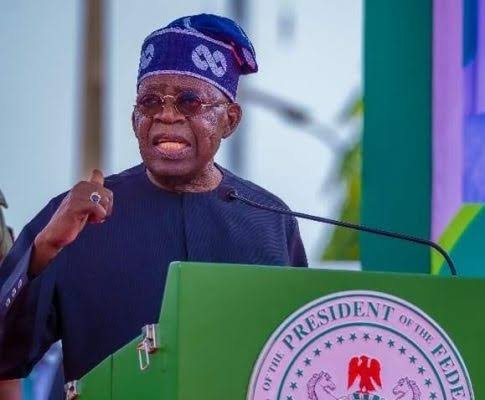
President Bola Tinubu is determined to end the 17-year scourge of insecurity ravaging parts of Nigeria through a comprehensive Five-Year Strategic Defence Operations Plan.
The plans is designed to strengthen the country’s security architecture, improve military effectiveness, and ensure a coordinated response to emerging threats.
The spokesperson of the APC Presidential Campaign Council, Mr. Dele Alake, made the assertion in a statement he issued on Sunday.
The plan, he said, provided a long-term framework for aligning defence priorities, operational requirements, capability development, and expenditure with Nigeria’s current and anticipated security challenges.
The initiative is a major component of President Tinubu’s determination to reposition the nation’s security architecture toward a more coordinated, intelligence-led, technology-enabled, and prevention-oriented system capable of addressing terrorism, banditry, kidnapping, and other forms of criminality, he said.
He stated that in the last three years, the scale of the administration’s ongoing military operations across the country had led to the elimination of more than 15,000 Boko Haram terrorists and bandits, with more than 130,000 fighters and dependents of Boko Haram having surrendered through Operation Safe Corridor, the federal government’s rehabilitation programme for repentant insurgents.
The figures, Alake said, underscored the administration’s two-phase approach of sustained military operations and non-kinetic interventions to address insecurity.
Expansion of military formations, manpower
He said to strengthen the Nigerian Army’s operational capacity and improve responses to security threats, President Tinubu had created four new Army divisions and restructured existing military formations.
The reforms, he informed, aimed to expand operational coverage, decentralise military operations, and enable troops to respond more swiftly to security threats across the country.
“The President has also approved the establishment of two additional Army depots in Osogbo, Osun State, and in Amasiri-Edda, Ebonyi State, to expand military training capacity and accelerate the recruitment and training of new soldiers.
“Each depot can accommodate 6,000 recruits at a time, bringing their combined training capacity to 12,000 soldiers.
“The Osogbo facility’s capacity is already being demonstrated, with 5,210 recruits currently undergoing training there.
“The expansion of training facilities is expected to reduce recruit turnaround time and increase the number of soldiers available for deployment.
“To further the manpower expansion drive, President Tinubu also approved recruiting an additional 28,000 soldiers to strengthen the military’s presence on the ground and enhance its operational effectiveness.
“The President also approved recruiting 50,000 additional police officers as part of broader efforts to reinforce internal security, improve policing capacity, and strengthen the country’s response to criminal activities,” Alake said.
According to him, beyond investments in equipment, technology and training, the administration is also investing in military accommodation and operational infrastructure to improve personnel welfare and effectiveness.
One such project, he said, was the 700-unit military barracks in Ikere-Ekiti, Ekiti State, designed to provide military personnel with a professional living and working environment and essential military infrastructure.
“The facilities are expected to provide the accommodation and operational support personnel need while strengthening the military’s capacity to maintain an effective presence in the area,” he said.
The measures, he stated, reflected the administration’s determination to address manpower and infrastructure gaps, improve the capacity of security agencies, and ensure personnel are adequately trained, equipped, and deployed to areas facing security challenges.
Intelligence, surveillance and coordination
“Under the Five-Year Strategic Defence Operations Plan, the Federal Government is adopting a more strategic approach to national defence by ensuring that investments in the security sector are guided by clearly identified threats, operational requirements and national priorities.
“The plan is expected to strengthen combat readiness, address critical capability gaps, optimise available resources and minimise unnecessary expenditure and wastage,” Alake said.
READ ALSO:
World Cup: Lagos honours Flamingos with state dinner (+ gifts)
Nigeria’s power crisis, proof of stagnation, By Kazeem Akintunde
Nigeria’s mission in S’Africa urges calm in row over Ramaphosa spokesman’s remarks
NDLEA intercepts large meth consignments hidden in cereals packs
NGE demands immediate release of Journalist Ojukwu from prison
Ogun 2027: Hunye rejoices with Adebutu, hails victory over INEC
Decoupling Sovereignty Index (7): From newsroom indices to the measurement of sovereign reality
Private universities and the tuition trap: Capital market to the rescue?
Yilwatda to N’Central govs: Unite stakeholders for Tinubu’s victory
Justice Lifu’s judgment, Atiku’s fate and the road to 2027
Lookman ruled out of Tanzania return leg with knee ligament sprain