
By RHEMA IKECHI
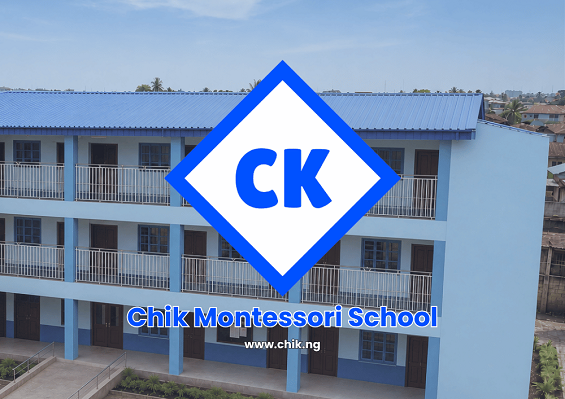
Ushered into the Nigerian educational system nearly a century ago at St Joseph’s School for Girls in Calabar, Montessori has become very popular owing to its effectiveness as a method. Popular as it has been, many schools have veered off the track, and not many parents know what to expect from a school that carries the Montessori tag anymore. However, Chik Montessori School has distinguished itself as a perfect example of one which has stuck to the true Montessori tradition. This piece highlights the distinctive features of Chik Montessori School.
In April 1926, St Joseph’s School for Girls in Calabar began an educational experiment that placed Nigeria in the early international history of Montessori education. The headmistress, Mother Mary Charles Magdalene Walker, an English missionary, better known in Nigeria as Sister Magdalene/the “Nun of Calabar”, introduced the Montessori Method after training pupil-teachers as directresses or guides.
This date matters. Montessori is often seen in Nigeria as a recent import linked to private nurseries, but historical research shows documented practice goes back over 100 years. Maria Montessori opened her first Casa dei Bambini (Children’s House) in Rome in 1907.
St Joseph’s was no token experiment. A study by Maria Patricia Williams notes it had about 200 pupils in 1926 and earned an A+ on inspection. Monsignor Arthur Hinsley, the Holy See’s Apostolic Visitor to British Africa, called it a well-known Montessori school and a model for Africa in 1929.
After its introduction in Calabar, the Montessori method spread gradually through missionary and private schools, with Nigerian women trained as practitioners. Notable schools like Bereton Montessori (1978) and Greensprings (1985) helped expand the approach, while formal teacher training grew by the 2000s. Today, Montessori is widespread in Nigeria, but a 2024 review observed that many Nigerian schools identified as Montessori even though relatively few fully understand or implement the approach. The authors pointed to limited specialist training, inadequate materials, overcrowding and the persistence of conventional teacher-led practice inside schools carrying the Montessori name.
A colourful classroom or the presence of Montessori materials alone does not make a school Montessori. The key is how adults, children, materials, and environment work together to help children construct knowledge, not just repeat it.
Chik Montessori School belongs to the later Nigerian Montessori history. Founded by Chinwe Ikechi in 1997, it started as a nursery and primary school, serving families in the Lagos mainland area and now operates three campuses in Lagos and Ogun, teaching children from three months to 17 years. The school emphasises prepared environments, guided choice, hands-on materials, independence, concentration and coordination as central features of its early years’ work.
Chik’s most distinctive feature is its use of the Montessori Cosmic Curriculum at the primary level. The Association Montessori Internationale defines Cosmic Education as Montessori’s framework for children aged six to 12. It presents science, history, geography, language, and math as interconnected rather than isolated subjects.
The curriculum starts with the universe’ story and moves to details through Great Stories or Lessons, covering the origin of the universe, life, human development, writing, and numbers. Children explore astronomy, physics, chemistry, biology, history, culture, literacy, and math in an integrated way that sparks imagination, reasoning, moral awareness, and responsibility.
At Chik, the cosmic curriculum supports the primary programme without replacing Nigeria’s academic subjects. The school balances Montessori’s inquiry-led approach with the need for literacy, numeracy, science, and social studies required for Nigerian secondary education.
That combination is important. Montessori education is sometimes caricatured as unstructured freedom, while Nigerian schooling is often associated with whole-class instruction, memorisation and examination preparation. Authentic Montessori is a prepared structure where guides observe readiness, present lessons, and provide meaningful freedom to explore.
For parents, the name on the gate should be the beginning of the inquiry rather than its conclusion. Schools should explain each classroom’s developmental level, teacher training, available materials, work period organisation, and progress tracking.
In schools claiming to use the Cosmic Curriculum, parents should see integrated study, not just hear the term. A lesson on the origin of life might connect biology, timelines, environmental science, literacy, and art. Studies of early human societies might link history, geography, technology, moral reasoning, and universal human needs. Schools must also localize the curriculum. Nigerian Cosmic Education should include local ecosystems, languages, histories, and communities alongside global knowledge. Montessori’s core idea of interconnected knowledge invites inclusion of Nigerian plants, climates, inventions, oral traditions, social institutions, and history.
Nigeria marks 100 years since its earliest recorded Montessori experiment. Sister Magdalene’s 1926 challenge was to replace passive teaching with active learning led by trained African women. Today, the challenge is that the Montessori name is widespread, but public understanding of it is limited.
Chik Montessori School’s growth from its 1997 inauguration to three campuses reflects this broader history, linking a community school in the Lagos-Ogun corridor to a tradition that reveals the universe as an interdependent whole and children as active participants within it. Its lasting value lies less in its age and more in the presence of trained adults, purposeful materials, coherent lessons, careful observation, safe environments, and children developing independence.
While longevity provides history, consistent educational practice gives it meaning. For Montessori to meaningfully thrive in Nigeria’s next century, schools must make their practices transparent, invest in teacher training and materials, and help parents distinguish a true educational philosophy from a mere slogan. The future of Montessori in Nigeria depends not on how many schools bear the name, but on how faithfully, intelligently, and locally they bring it to life in every child’s daily experience.
Source dossier
- Williams, Maria Patricia (2021). ‘The Contribution of “A Sister of Notre Dame” and the “Nun of Calabar” to Montessori Education in Scotland, Nigeria and Beyond.’ Rivista di Storia dell’Educazione, 8(2), 123–134. https://rivistadistoriadelleducazione.it/index.php/rse/article/download/10344/10401/34011
- Association Montessori Internationale. ‘Cosmic Education.’ https://montessori-ami.org/trainingvoices/cosmic-education
- Association Montessori Internationale. ‘Timeline of Maria Montessori’s Life.’ https://montessori-ami.org/resource-library/facts/timeline-maria-montessoris-life
- American Montessori Society. ‘Montessori Cosmic Education: The Key to a Shared Direction and Common Goal.’ https://amshq.org/blog/montessori-education/2024-10-23-montessori-cosmic-education-the-key-to-a-shared-direction-and-common-goal/
- Raheem, Oluwaseyi K. and Oredein, Afolakemi O. (2024). ‘Scholarly View on Montessori Nursery and Primary School Effectiveness in Nigeria.’ Lead City University Postgraduate Multidisciplinary Serial. https://repository.lcu.edu.ng/bitstreams/5c057ccf-3485-4609-bff7-c78e6a5e2bd6/download
- Chik Montessori School. Official website (institutional source for present programmes, age ranges and campus addresses). https://chik.ng/
- The Guardian Nigeria (21 June 2018). ‘Montessori method of learning imperative in early childhood.’ https://guardian.ng/features/montessori-method-of-learning-imperative-in-early-childhood/