
Boiling Point Arena, Nigeria’s hybrid media discourse platform, will tonight, Sunday, October 11, 2026 interrogate the worsening economic pressures confronting Nigerian households as it asks a question that has become increasingly difficult for many citizens to answer: Are you rich, poor or somewhere in between?
The 48th edition of the programme scheduled for 8 p.m. will focus on the theme, “Where Did the Middle Class Go? How Are Nigerians Surviving the Cost-of-Living Crisis and What Can Government Do to Ease Hardship Pain?”
It will examine the apparent erosion of the Nigerian middle class, the struggle to maintain decent living standards and the policy interventions required to ease the country’s cost-of-living crisis.
To be transmitted via Zoom, the discourse, over a two-hour duration starting from 8pm, will be broadcast live on seven partner radio stations across Lagos, Ogun and Delta states.
Boiling Point Arena, the once-in-a-month current affairs programme which debuted four years ago in November 2022, is hosted by a veteran journalist and communication strategy expert, Ayo Arowojolu.
Frontline traditional ruler, the Olowu of Owu Kingdom, Prof Saka Matemilola, will chair the session and herald the discourse with a keynote address.
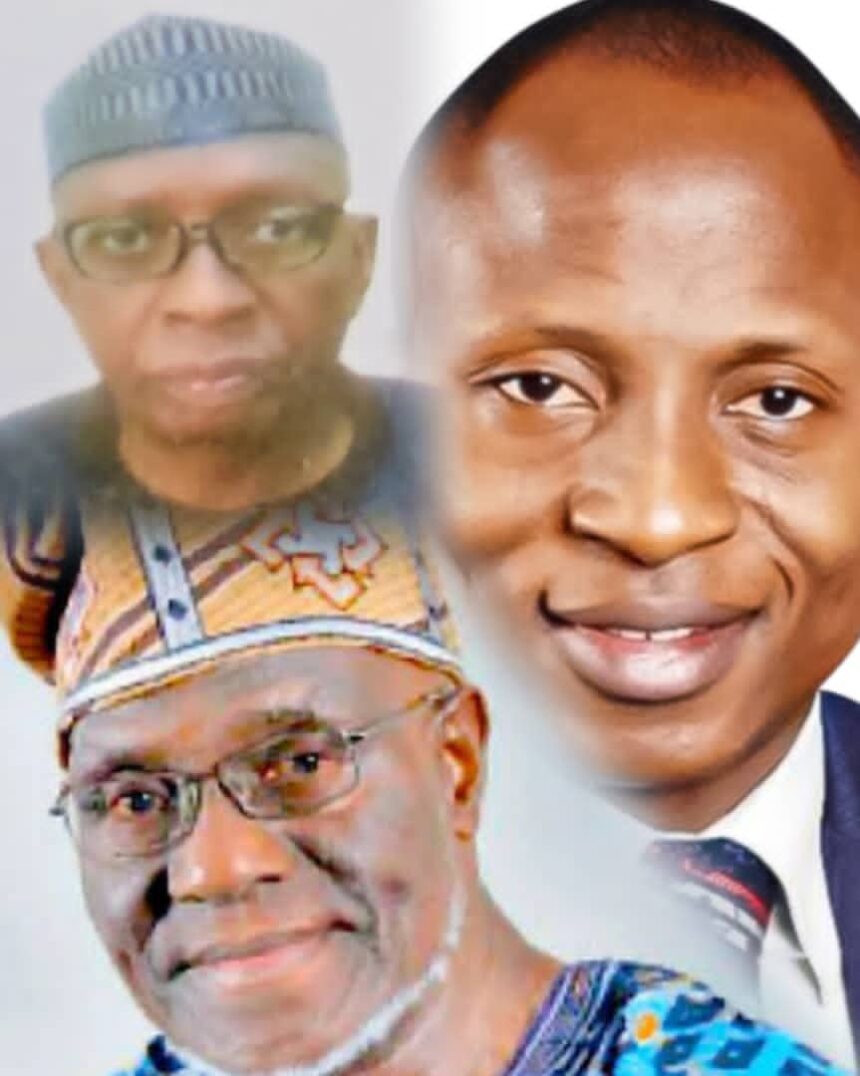
The Guest Speakers/Discussants for the edition are a pioneer former President of the Nigeria Labour Congress, NLC, Comrade Hassan Sunmonu, now an Octogenarian/elder statesman, Prof Abdullahi Sule-Kano, a professor of Political Science at the Bayero University, Kano, and Dr Paul Alaje, a prominent economist and versatile financial analyst.
The special Independence edition, organised for Nigerian workers following the country’s 66th anniversary of nationhood, comes amid persistent concerns about food affordability, housing costs, transportation expenses, school fees, healthcare bills and the declining purchasing power of household incomes.
The conversation will therefore seek to establish what it means to belong to the middle class in contemporary Nigeria.
Is economic class determined by monthly income, assets, purchasing power, lifestyle or the ability to meet basic needs without constant financial anxiety?
More importantly, has the Nigerian middle class actually disappeared, or is it undergoing a painful contraction that could have far-reaching implications for social mobility, economic growth and national stability?
Sunmonu’s longstanding engagement with the Nigerian labour movement is expected to provide a historical perspective on workers’ welfare, wage struggles, collective bargaining and the changing fortunes of Nigerian employees.
Professor Sule-Kano will bring a political and governance perspective to the discussion, examining the relationship between public policy, political choices, economic inequality and the welfare of ordinary citizens.
Alaje, an economist and financial analyst, is expected to explain the economic forces affecting household purchasing power and explore practical measures for restoring financial stability to Nigerian families.
Beyond diagnosing the problem, the panel will examine what government can do to cushion the impact of economic hardship, whether wages adequately reflect the cost of living, and how employment, productivity, food security, housing, energy costs and social protection can contribute to a more secure society.
The discussion will also raise questions about the responsibilities of employers and organised labour in protecting workers’ welfare and ensuring that economic reforms translate into tangible improvements in citizens’ daily lives.
For Nigerian workers, the Independence dimension adds another layer of urgency.
After 66 years of nationhood, what does independence mean to a worker whose earnings can barely sustain the family?
What is the value of economic growth if millions of citizens struggle to afford basic necessities?
The programme will challenge participants and viewers to examine their own economic circumstances.
A person may own a house or a car but have little disposable income; another may earn a seemingly attractive salary but remain burdened by debt and rising household expenses.
These realities raise a fundamental question: can outward signs of financial success still be trusted as indicators of economic wellbeing?
Boiling Point Arena will approach the subject as an open national conversation, testing the widely held belief that Nigeria’s middle class is vanishing against the experiences of workers, professionals, entrepreneurs, retirees and other households.
The platform is a hybrid media discourse forum that connects participants through Zoom and YouTube, alongside partner radio stations reaching audiences across different communities.
Its format is designed to bring expert perspectives into direct engagement with public concerns.
Among the partner radio stations are WASH 94.9FM, Lagos, Sweet 107.1FM, Abeokuta, Roots 97.1FM, Abeokuta, Erimbe 94.7FM, Shagamu, Women Radio 91.7FM, Mowe, Opera Tune 106.3FM, Abeokuta, and Kruzz 92.9FM, Asaba, Delta State alongside a cable television station, NSTV, on GOtv Channel.
READ ALSO:
Zenith Bank to launch maiden Girl-Child empowerment programme
US jails Nigerian 30 months over email fraud
Ekiti: Oyebanji attributes re-election, peaceful state to God’s grace
INTIMATE AFFAIR: The church and its unfaithful singles
Tunde Lemo gives recipe for Remo’s industrial development
Dele Alake @70: A journey of conviction, By Moses Jolayemi
King’s College and its concession conundrum
UN hails Pillay’s Nobel Peace Prize, says justice must prevail
NBET begins N728.98bn legacy debt payments to GenCos
Oloyede at 72: MMPN praises his contributions to Islam, Nigeria