


By SUFUYAN OJEIFO
It does not come with sirens. It does not announce itself. It waits patiently in the wings, watches you build your triumph on the very weapon you used against another man, and then hands that same weapon to your own enemies.
That is the story of President Bola Ahmed Tinubu in the buildup to 2027.
In 2015, Tinubu was the grand architect of change. He supplied the funding, the strategy, the imprimatur, the push and the leadership behind the oppositional alliance that did what had never been done before in Nigeria: defeat a sitting President.
Goodluck Jonathan was assailed, abandoned, betrayed by loyalists, and finally defeated at the poll. It was the first time an incumbent President would lose. Tinubu made it happen — but he did not make it happen alone.
Let us be honest about 2015. Jonathan was not merely a victim of conspiracy. His government suffered from a perception — fair or not — of drift on corruption, of mishandling of insecurity, and of PDP fatigue after 16 years in power. Tinubu did not invent that discontent. He organised it. He gave it a vehicle, a candidate in Muhammadu Buhari, and a single message: change.
Jonathan suffered sustained nationwide protest over an increase in the pump price of petroleum products. The Tinubu-led opposition galvanised the progressives around and behind Buhari. The mother of all protests shut down Nigeria. The opposition weaponised hardship. The opposition weaponised insecurity, accentuated by the Chibok girls abduction. And the people listened.
Eleven years later, the script has returned — only the actors have changed places.
Tinubu stepped in as President on May 29, 2023 and from day one in office removed fuel subsidy, deregulated the downstream sector and rendered it prostrate to the vagaries of demand and supply.
At first, the complaints were muted. Then came disaggregated protests by sundry groups. Even though there has not yet been a protest like the mother of all protests under Jonathan, it is clear that the Tinubu administration has exhausted much of its goodwill.
The removal of fuel subsidy has fuelled economic hardships that have ramified the household economy: pump price of fuel now hovering between N1,300 and N1,410 per litre in many cities, exorbitant transport costs, food price inflation, soaring house rents, school fees, cost of healthcare, and other utility bills.
The protest against bad governance is being witnessed amid ongoing electioneering for the January 16, 2027 presidential poll in which Tinubu is on the ballot as an incumbent for the APC.
The nationwide economic hardship, which is the stark reality at the micro-economic level, has been easily weaponised by the opposition to question the morality of Tinubu’s quest for a second term.
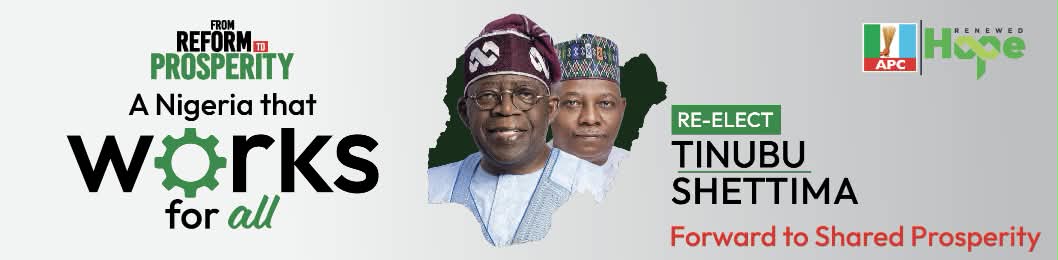
Tinubu and his policy implementation team are busy explaining what has been done at the macroeconomic level in the first term as being foundational to what would be incrementally built upon to usher Nigeria and Nigerians from reforms to prosperity from 2027 to 2031. The argument is not frivolous. Reforms do take time. But in politics, timing is morality. A reform that is correct on paper but unbearable in the market will be judged not by economists, but by mothers in the market.
That is why the administration suffers a trust and credibility deficit. And this matters amid electioneering.
There is a feeling of déjà vu here: this was exactly what happened to Jonathan.
Under Tinubu, there have been cases of abductions from Oyo through Niger to Zamfara, Benue, Borno down to the Southeast, which have cast blights on the security architecture of the Tinubu administration. These failures have discounted the administration’s gravitas and questioned the capacity of Tinubu to deliver.
Tinubu’s “Daniel” has come to judgment in the court of the Nigerian people.
Nigerians [a free, fair and credible election will determine their number] are poised for a change, just the way they did under Jonathan. Many, including yours sincerely, had thought it would be difficult to defeat an incumbent. But it happened, and Jonathan was ready to concede victory in the national interest. It is hoped our leaders will emulate the Jonathan exemplar if they find themselves in a similar situation in 2027.
The same philosophy that drove the Tinubu-led opposition that produced a change of government in 2015 is driving the Atiku, Obi, Makinde, Duke, et al., opposition against Tinubu.
But here is the honest contradiction the opposition must face, and which this column will not hide: in 2015, the opposition united. In 2027, it has not.
■ The Philosophy of Resistance
This is not mere politics. It is philosophy.
The trio of John Locke, Jean-Jacques Rousseau and Henry David Thoreau offer the philosophical frameworks and grounding, the essential ingredients and validations in their respective seminal works.
John Locke (Second Treatise of Government, 1689): Locke is the primary architect of this exact logical sequence — that people voluntarily submit their natural freedom to a government under a social contract, and if those rulers subdue that freedom instead of protecting it, the people are absolved from obedience and have the right to revolt. In Chapter 19, “Of the Dissolution of Government,” he argues that when legislators try to take away and destroy the property or freedom of the people, they put themselves into a state of war with the people, who are then free to resist and establish a new government.
Jean-Jacques Rousseau (The Social Contract, 1762): Rousseau famously examined the paradox of citizens submitting their freedom to an authority only to find themselves in chains — “Man is born free, and everywhere he is in chains” — arguing that any government that usurps the sovereign will of the people loses its legitimacy and breaks the social pact.
Henry David Thoreau (Civil Disobedience, 1849): Thoreau expressed the second half of the argument — that resisting a bad government is preferable to submitting to it — writing that all men recognise the right of revolution, which is “the right to refuse allegiance to, and to resist, the government, when its tyranny or its inefficiency are great and unendurable.”
Crucially, none of these thinkers equated resistance with mere anger. Locke demanded constitutional remedy. Rousseau demanded the general will, not the mob. Thoreau demanded personal conscience, not electoral opportunism. The people’s right to resist is real, but it is only legitimate when it seeks a better contract, not just a change of contractors.
The legitimate voice of Nigerians, expressed before, at and after the poll, must not be muffled. The voice of the people is the voice of God — “vox populi, vox Dei.” Let the people speak, and the people will speak loud and clear. Let the will of God be done, and it shall be done. And let Karma unravel.
■ Physical and Virtual Electioneering: Opposition Parties’ Blitzkrieg — And Its Fatal Flaw
While the APC Presidential Campaign Council has planned what it considers a strategic campaign schedule for Tinubu, which would take him to some, if not all, states of the federation as an incumbent who should draw from name recognition — even though the moot question of performance has now overshadowed name recognition — the opposition parties have disaggregated their respective machineries, trying to grab states they consider to be their strongholds.
Makinde is poised to heavily discount Tinubu’s projected vote haul in Oyo and Bauchi. Atiku is poised to do the same in the Northeast. The Obi-Kwankwaso ticket is poised to hold firm the Southeast, and heavily discount what would have been Tinubu’s projected votes in the South-South, Northwest and North-Central zones.
These are at the level of analytical projections. But if the turnout of Nigerians at the presidential campaigns provides clear indications and possible directions to specific outcomes on January 16, 2027, then the status quo should be ready to change.
Nigerians have seen mass mobilisation — large crowds, boisterous social media campaigns targeting the critical youth group of the voter population and other groups outside the loop. On this score, the Obi-Kwankwaso movement through the consciousness of the Nigerian people has been hugely consequential, forcing fundamental shifts in, and revisions of, previous political assumptions.
The difference is now increasingly clear between 2023 and 2027, between the Obi-Datti ticket and the Obi-Kwankwaso ticket, between the Atiku-Okowa and Atiku-Amaechi tickets. With Makinde, et al., in the mix, the emerging atmospherics and nuances of the political landscape in Nigeria have the potential to upstage the applecart.
But potential is not victory.
Here is the arithmetic the opposition cannot escape: In 2023, Tinubu won with 36.6% because Atiku and Obi split the opposition vote. If in 2027 Atiku, Obi-Kwankwaso and Makinde each hold their strongholds but refuse to unite, they will not defeat Tinubu — they will re-elect him. Crowds do not vote. Coalitions do.
Karma, therefore, is not automatic. In 2015, karma worked because the opposition did the hard work of unity. In 2027, karma will only work if the opposition learns that lesson. Anger without alliance is just noise. A divided opposition is Tinubu’s best campaign manager.
Karma is lurking in the wings — but it is waiting for the opposition to give it a vehicle.
■ What Ails Nyesom Wike About Peter Obi
A video clip of Nyesom Wike, wherein he was exasperated about the popularity of Obi, has been trending on social media. The short clip showed Wike addressing some campaign coordinators or political supporters. The exact date of the clip is disputed — some trace it to 2023, others to 2026 — and this column will not pretend to resolve that dispute.
What is not in dispute is its meaning. Whether then or now, Wike’s frustration captures a truth: Obi’s popularity has become the issue in Nigerian politics.
Little wonder, Wike was heard complaining in the clip: “Everywhere, Obi, Obi, Obi, Obi, Obi. What is it? What is happening?…”
The answer may appear simplistic: the people appear to have found their Moses and are rallying behind him to take them to the Promised Land, to that new Nigeria which he assures them is possible.
But really, to be sure, Wike’s exasperation is instructive. It is the cry of an old order confronted by a movement it cannot buy, cannot bully, and cannot explain away. When a people decide that they have suffered enough, no amount of structure can permanently silence them. That is the force Tinubu himself rode in 2015 when he, together with others, ensured Buhari’s victory. That is the force now arrayed against him.
Yet Moses, too, needed Aaron. Popularity without structure is a sermon without a church. Obi’s task in 2027 is not to prove he is loved. He has proved that. His task is to prove that love can be converted into organisation — polling agents, ward structures, and a coalition that does not collapse on election day.
■ The Lesson For Both Sides
In 2015, Tinubu taught Nigeria how to bring down a President with hardship, insecurity, protest and alliance. In 2027, Nigeria is teaching Tinubu the same lesson.
That is why karma is a bitch.
But karma is also a teacher, and its lesson is not for Tinubu alone.
To Tinubu: Power is a loan from the people, not a personal inheritance. You cannot weaponise suffering to climb to power and then ask the suffering to be patient once you are there. If you lose, lose with the grace of Jonathan. History remembers the man who conceded more kindly than the man who clung on. Do not let ambition turn a defeat into a crisis.
To the opposition: Do not mistake the anger of the people for your own virtue. The crowd that brought down Jonathan did not bring change; it brought a change of faces. If you ride this same wave of hardship and insecurity into power in 2027 without unity, without a common programme, and without a plan for the morning after, karma will be waiting for you too in 2031.
The people are not looking for another saviour. They are looking for a government that will keep the social contract — food that is affordable, streets that are safe, and a state that serves, not subdues.
Karma does not belong to any party. It belongs to the people.
Let the people speak.
READ ALSO:
Deepening the service attitude conversation in Nigeria (4)
Makinde’s fumigation plan, ploy to siphon public funds —Oyo APC
Tinubu assures of inclusive governance as Ndigbo leaders boost re-election bid
TAJBANK, Lagos govt sign MoU on infrastructure financing
Omo-Agege: Four NDC supporters killed during campaign tour
Auxiliary: Court adjourns to Nov 30 for adoption of final addresses
Fake news alert: APC distances self from ‘letter to INEC’
Amb Isola hails Ogun APC chairman, Yemi Sanusi, at 73
When the gavel replaces the ballot, By Kazeem Akintunde
Tinubu to APC leaders: Forgive one another, unite ahead of 2027
‘Planned clash’ over parks: Oyo police assure residents of safety
Oyo 2027: We didn’t destroy any billboard, APC tells opposition