



Except there is a comprehensive reform capable of translating military presence into effective protection for citizens, the federal government’s decision to expand the Nigerian Army from eight to twelve divisions may not yield the desired impact.
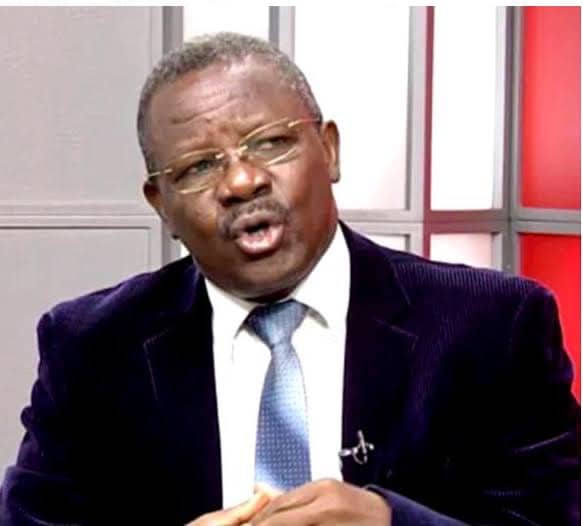
Retired Commodore and Senior Fellow of the Africa Security Forum, Dr. Kunle Olawunmi, gave the warning on Friday while speaking on an OGBC radio programme, “Morning Flight”.
He argued that while the establishment of additional military formations represented a significant strategic step, it should not be mistaken for a guarantee of improved national security.
According to him, Nigeria’s worsening security challenges—including terrorism, banditry, kidnapping, attacks on farming communities and threats to critical national infrastructure—justify strengthening the Armed Forces, but success would ultimately depend on how effectively the new formations were equipped, coordinated and integrated into the nation’s wider security architecture.
“A headquarters is not a division. A formation becomes security only when trained manpower, intelligence, mobility, logistics, communications and command are converted into protection for citizens,” he stated.
The retired Naval officer urged President Bola Tinubu, the National Security Adviser, the National Assembly, state governors and military authorities to focus on building operational capability rather than merely increasing military structures.
He maintained that each of the proposed divisions must possess adequate manpower, intelligence capability, mobility, medical support, logistics, secure communications and the capacity to sustain continuous operations if the expansion is to produce measurable improvements.
Olawunmi is currently an Associate Professor of Global Counter-Terrorism at Chrisland University, Abeokuta.
He also stressed that military operations alone could not overcome Nigeria’s complex security threats unless they were supported by seamless intelligence sharing among the Armed Forces, the Nigeria Police Force, the Department of State Services, Nigeria Immigration Service, Nigeria Customs Service, the Nigeria Security and Civil Defence Corps and financial intelligence agencies.
He warned that intelligence would lose its value when agencies operated in isolation, insisting that coordinated information sharing remained one of the strongest weapons against organised criminal networks.
Beyond institutional collaboration, he highlighted the importance of community participation, noting that residents, farmers, transport operators and traditional institutions often detected emerging threats before security agencies.
According to him, public trust could only be earned through confidential reporting mechanisms, protection of informants and sustained community engagement.
The security expert further advocated greater deployment of modern technology—including drones, surveillance systems, geospatial intelligence and secure communication platforms—to complement human intelligence in combating armed groups operating across difficult terrain.
However, he warned that technological tools alone could not dismantle criminal organisations, arguing that authorities must equally target the financial, logistical and arms supply networks sustaining terrorism, banditry, kidnapping and illegal mining.
He also observed that military victories could not become permanent unless they were followed by effective policing, functioning courts, responsive local government administration and the restoration of public services in recovered communities.
According to him, security should be measured not by the number of military headquarters established but by visible improvements in citizens’ lives.
He listed key indicators of success as faster emergency response, safer highways, farmers returning to their farmlands, dismantling of kidnapping syndicates and proactive protection of vulnerable communities before attacks occur.
While commending the courage and sacrifices of Nigerian security personnel, Olawunmi urged government at all levels to ensure that expanding the Armed Forces did not result in what he described as “security architecture inflation,” where personnel and expenditure increase without corresponding gains in public safety.
He concluded that the ongoing military expansion presented Nigeria with an opportunity to redesign its entire security framework by integrating intelligence, rapid response, territorial control and effective governance into a coordinated national security system.
“The standard should be simple: formations create presence, intelligence creates precision, and governance makes security durable,” he said.