
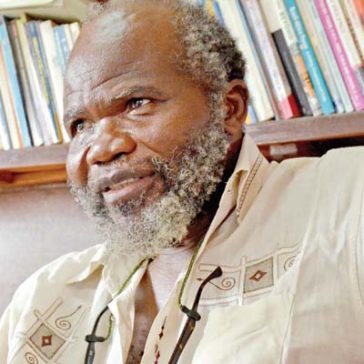
Former Chief of Defence Training and Planning, General Ishola Williams (Rtd), has declared that terrorism, banditry and large-scale kidnapping could be substantially degraded within six months.
He said the feat could be achieved if the federal government empowered the military leadership and adopted a more aggressive operational posture which brooked no excuses from the military chiefs or otherwise they would be fired.
Williams made the declaration on Sunday while featuring on as one of the discussants in the 44th edition of the popular interview discourse, Boiling Point Arena.
Other participants in the programme with the theme, “Kidnapping Economy and National Insecurity: Are Nigeria’s Security Votes Working? What Must Change to Make Nigerians Safe Again?” are military intelligence expert, Col. Yomi Dare (rtd), and civic technology advocate and Co-founder of BudgIT, Mr Seun Onigbinde.
According to Williams, Nigeria’s security institutions possessed sufficient manpower, experience and intelligence capabilities to confront criminal elements effectively.
What was lacking, he argued, was the political courage required to put the feet of military commanders to the fire.
He asked rhetorically: “Why is President Tinubu afraid of his military chiefs?”
He lamented that criminal groups had become emboldened over the years because government responses often appeared reactive rather than proactive.
He insisted that the nation must move beyond endless rhetoric and launch a coordinated national offensive capable of dismantling criminal networks operating across forests, highways and rural communities.
Williams maintained that insecurity had persisted for too long because successive administrations had failed to treat the crisis with the urgency and strategic coherence required in a wartime situation.
Picking up from Williams’ position, Col. Yomi Dare stressed the urgent need for stronger operational resolve by security agencies.
The retired military intelligence officer argued that while Nigeria’s armed forces had recorded notable successes in several theatres of operation, the country required a much more decisive and intelligence-driven approach to confront the evolving tactics of terrorists, bandits and kidnappers.
According to him, criminal elements have increasingly transformed their activities into a sophisticated business enterprise, exploiting weak coordination among security agencies and gaps in intelligence gathering.
Dare called for better synergy among the military, police, intelligence agencies and local communities, stressing that victory against insecurity could not be achieved through isolated efforts.
He emphasized that modern security challenges demanded speed, precision and sustained pressure on criminal networks, warning that anything short of that would merely allow the perpetrators to regroup and continue their operations.
The retired Colonel also underscored the importance of strengthening community-based intelligence, arguing that local residents often possessed critical information capable of preventing attacks before they occurred.
Earlier in the programme, Seun Onigbinde delivered a scathing critique of Nigeria’s security financing architecture, particularly the controversial security votes system operated by governments at various levels.
The BudgIT co-founder described security votes as “corruption legalised,” arguing that billions of naira were expended annually with little transparency, accountability or measurable impact on citizens’ safety.
According to him, the nation’s anti-terrorism and anti-banditry campaign had increasingly resembled “pouring water into a basket” because huge sums continued to be committed to security without corresponding outcomes.
Onigbinde contended that Nigerians deserved to know how public funds allocated for security were spent and what results were being achieved.
He questioned a system where security expenditures remained largely opaque while kidnappings, abductions and violent attacks continued to spread across the country.
The transparency advocate maintained that unless security spending became subject to stricter accountability mechanisms, the nation risked perpetuating a cycle where resources were endlessly deployed without addressing the root causes of insecurity.
He further argued that accountability should not be viewed as an obstacle to security operations but rather as a necessary tool for ensuring effectiveness and public trust.
Although they approached the issue from different perspectives, the three discussants ultimately converged on one fundamental point: Nigeria’s insecurity crisis is neither inevitable nor insurmountable.
While Williams focused on political will and military empowerment, Dare emphasized operational decisiveness and intelligence effectiveness.
Onigbinde, on the other hand, spotlighted the governance and accountability deficits surrounding security expenditures.
Together, their submissions painted a picture of a nation that possessed the resources and institutional framework needed to defeat insecurity but continues to struggle because of weak implementation, insufficient transparency and a lack of coordinated strategy.
Participants in the discourse agreed that kidnapping had evolved into a thriving criminal economy that threatened national stability, economic growth and public confidence.
As the two-hour session drew to a close, a recurring message echoed across the submissions of the speakers: Nigeria must move beyond routine condemnations and adopt bold, measurable and accountable actions capable of restoring security and public trust.
For many listeners, the 44th edition of Boiling Point Arena was not merely another discussion on insecurity, but a stark reminder that while billions continued to be spent in the name of security, Nigerians were increasingly demanding one simple outcome — safety.
The monthly public affairs platform, Boiling Point Arena, hosted by media professional and public intellectual, Dr. Ayo Arowojolu, has become one of Nigeria’s most influential forums for interrogating critical national issues and proposing practical solutions.
The programme, transmitted via Zoom and broadcast live by multiple radio stations in Lagos, Ogun and Delta States, was chaired by the Olowu of Owu Kingdom, Oba Prof Saka Matemilola.
READ ALSO:
Amad fires Cote d`Ivoire to 1-0 victory over Ecuador
Troops nab suspected arms racketeer, recover ammunition
Netherlands, Japan share spoils in thrilling 2-2 World Cup draw
Who controls the rhythm of this war?
Gen Abubakar’s death: Family speaks
Hamzat’s Lagos development template, By Kazeem Akintunde
World Cup: Germany hammer Curacao 7-1 in group E clash
DHQ delegation in Katsina, vows justice for slain Gen Rabe Abubakar
Five dead, 11 confirmed cases in Plateau cholera outbreak
Bandits kill three, burn houses in Niger
Police neutralise three suspected bandits, recover firearms
Military airstrikes kill 27 terrorists in Borno Tumbus enclaves
Lagos: Police to impound vehicles with covered, obscured number plates
Tinubu actualising S’East roads conceived in colonial era –Umahi
NDLEA arrests businessman with cocaine starched in shirts, towels