

By ABANIKANDA OLUMORO
Nigeria’s public space is becoming increasingly volatile, and much of that volatility is being fueled online. In recent days, I came across comments by social media commentators, including Godwin Onoghokere and others, describing a letter from the Muslim Youth Council of Nigeria as “violence” rather than peaceful advocacy. The letter reportedly demanded respect for Islamic religious sensitivities following remarks attributed to a local government chairman in Nasarawa State.
What concerns me is not disagreement itself—debate is healthy in any democracy—but the speed with which religious expression is branded as extremism. When Muslims assert that their faith, including adherence to Shari’ah, is inseparable from their identity, it is immediately framed in some quarters as a threat to national coexistence. Yet millions of Nigerian Muslims understand Shari’ah primarily as a moral and spiritual guide, not as an instrument of aggression.
The controversy surrounding the Doma local government chairman’s comment—said to have been retracted with an apology—should have ended with dialogue and mutual understanding. Instead, it became another flashpoint online, with sweeping claims that Islam in Nigeria is inherently violent. Such generalizations deepen suspicion and reinforce harmful stereotypes.
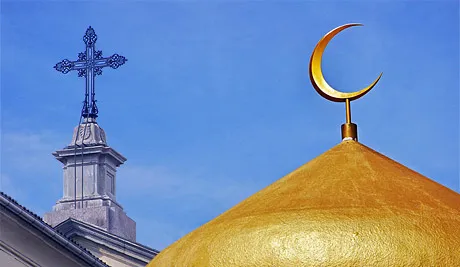
Nigeria’s strength lies in its diversity. Christians, Muslims and adherents of other faiths have lived side by side for generations. It is unfair and counter-productive to judge an entire religious community by the actions of a few or by unverified social media narratives. Viral videos and emotionally charged posts often circulate without context, yet they shape public perception in powerful ways.
If we allow social media to devolve into a space where faith communities are routinely portrayed as threats, we risk normalising hostility
The larger issue is how online discourse amplifies division. Social media platforms have become battlegrounds where complex religious and political questions are reduced to inflammatory soundbites. When that happens, nuance disappears and fear takes its place.
This tension is not occurring in isolation. Nigeria continues to grapple with insecurity in parts of the North-West and North-East, as well as separatist agitations in the South-East. Groups such as the Indigenous People of Biafra have drawn both local and international attention. At the same time, debates around engagement with armed groups have placed figures like Sheikh Ahmad Gumi in the spotlight, with sharply divided public opinion about his approach. Former President Olusegun Obasanjo has previously cautioned against simplistic narratives when addressing complex security challenges.
In this fragile climate, political leadership matters. President Bola Ahmed Tinubu carries the constitutional responsibility of safeguarding national unity and ensuring that no community feels targeted or marginalized. That responsibility includes discouraging rhetoric—online or offline—that frames religious identity as inherently dangerous.
This is not a call to silence criticism. It is a call for responsibility. Freedom of expression must not become freedom to inflame. Nigeria’s history shows that careless words can have lasting consequences.
If we allow social media to devolve into a space where faith communities are routinely portrayed as threats, we risk normalising hostility. And once hostility becomes normal, peace becomes fragile.
Nigeria deserves better. Its citizens—Muslim, Christian and others—deserve a public conversation grounded in fairness, evidence and mutual respect. Only then can the country move beyond suspicion toward genuine coexistence.
READ ALSO:
NRS targets N40.7trn revenue on back of tax reforms
Before you act, remember the law is watching
NAHCON signs 2026 Hajj transportation agreement
Tinubu to senators: Tinker with constitution for state police
Boiling Point: Guests to debate Nigeria’s electoral integrity ahead of 2027
R.O.A.D: A reform mandate before IGP Rilwan Olatunji Adio Disu
Nollywood’s biopic ‘Efunroye’ for release in cinemas
LIRS: Taxpayers urged to file individual annual returns ahead of deadline