

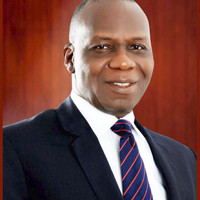
Being opening remarks of Dr. Tony Onyima, PhD, fNGE (Former Managing Director/Editor-in-chief at Sun Newspapers, ex-Commissioner for Information, Culture & Tourism, Anambra State) at the 4th Media Integrity Initiative Africa, MIIA, online training held on Saturday, February 21, 2026.

Good morning distinguished facilitators, colleagues, and participants joining us from across Nigeria and beyond. It is a pleasure to welcome you to this session of the MIIA training programme. I am particularly delighted because today’s gathering is not just another online class; it is evidence of a living community of professionals who believe that learning never truly ends.
Let me begin with something that struck me when I reviewed the registration metrics for this training. We have 181 registrants for this cohort, including 156 new participants and 25 returnees who have chosen to come back to learn even more. That number alone tells a powerful story. In an era where information moves at the speed of light and technology reshapes our profession almost daily, people are recognizing that standing still is no longer an option.
But beyond the numbers, what inspires me most is the diversity behind them. This training brings together journalists, editors, lecturers, public servants, communication professionals, CEOs, content creators, and students. Some of you are seasoned professionals who have spent decades in the newsroom or in public communication. Others are just beginning to find their voices in the media space. Yet here we are— learning together. That, in itself, is a powerful symbol of the digital age.
Years ago, professional learning was limited by geography. If a training was happening in Lagos, those in Sokoto, Enugu, Makurdi, or even Nairobi might never attend. But today, technology has erased those distances. According to the registration data, participants are joining from multiple states, cities, and even countries. This is the world we now live in: a world where knowledge travels faster than borders.
And that is precisely why continuous learning has become not just important – but essential.
The media landscape is changing in ways that even experienced professionals sometimes struggle to keep up with. The tools are changing. The platforms are evolving. The audience is smarter, faster, and more demanding than ever before.
A reporter today is no longer just a reporter. You are a fact-checker, a data interpreter, a digital publisher, a community builder, and sometimes even a crisis manager. It is therefore not surprising that the most popular course interests among registrants include conflict-sensitive reporting, understanding disinformation, and the legal limits of journalism.
These are not abstract topics. They are real issues affecting the credibility and survival of journalism today.
We live in a time when misinformation can travel around the world before the truth has even put on its shoes. A viral post can inflame tensions within minutes. And a single error can damage years of professional reputation. This is why learning must become a habit— not an event.
Continuous learning means staying curious. It means admitting that no matter how long we have been in the profession, there is always something new to understand.
I often tell younger journalists that humility is one of the most powerful tools in media practice. The moment we assume we know everything is the moment we begin to fall behind.
After many years in journalism and public communication, I still attend trainings, workshops, and conversations like this—not because I have nothing to teach, but because I always have something to learn. The digital world is constantly reinventing our craft.
Artificial intelligence is changing content creation. Algorithms are influencing what audiences see.
Citizen journalism is redefining who breaks the news first. If we do not update our knowledge regularly, we risk becoming strangers in the profession we once mastered.
The media landscape is changing in ways that even experienced professionals sometimes struggle to keep up with. The tools are changing. The platforms are evolving. The audience is smarter, faster, and more demanding than ever before.
Another remarkable insight from the registration data is the strong academic diversity in this cohort – from first-degree holders and master’s graduates to PhD holders and students.
This reminds us that learning is not determined by titles or qualifications. It is determined by mindset.
In truth, the most dangerous professional in the digital age is not the one who lacks experience. It is the one who has experience but refuses to learn.
Continuous learning also protects credibility. And credibility, in media, is everything.
Once the audience stops trusting us, our platforms may still exist – but our influence will slowly disappear. This is why programmes like this are extremely important. They help us pause, reflect, retool, and refine our skills.
But beyond skills, learning also reconnects us to purpose. Why did we choose media in the first place? Why do we tell stories?
Why do we investigate, question, and publish?
At its best, journalism is a public service. It helps society understand itself. It amplifies voices that might otherwise go unheard. It promotes accountability and informed citizenship.
Yet that mission can only be sustained if journalists and media professionals continue to grow intellectually and ethically.
I am also encouraged by the gender balance reflected in the registrations—60 percent male and 40 percent female participation. This is important because the future of media must be inclusive. Diverse voices strengthen storytelling and deepen perspectives.
Let me also acknowledge the organisers and facilitators who have put together this programme, including the technical rehearsals and preparation that make sessions like this run smoothly. Behind every successful training is a team committed to excellence.
To the participants, I want to say this: Do not attend this training passively. Ask questions.
Challenge assumptions.
Share experiences. Network with others in this virtual room.
Sometimes, the most valuable lessons do not come from the slides or presentations, but from the conversations that follow.
And to those returning participants – the 25 who have joined us again—you are sending a powerful message: growth is a journey, not a destination.
As we begin today’s session, let us remember something simple but profound: The digital age rewards those who keep learning. It leaves behind those who stop.
Knowledge today has a shorter lifespan. Skills must be refreshed. Perspectives must evolve.
But the good news is this: We have the tools, the networks, and the opportunity to grow faster than any generation before us.
So let us use this training not just to gain information, but to renew our commitment to excellence in media practice.
Because in the end, the future of journalism will not be determined only by technology.
It will be determined by the people willing to keep learning in spite of change.
Thank you, and I wish us all a very productive and inspiring session.
READ ALSO:
Tanker crash claims one life in Lagos
Couple abducted, one shot in Ondo community —Police
Executive order will boost FAAC revenue -Minister
Trump brings in new 10% tariff as Supreme Court rejects his global import taxes
Lagos: APC screens 540 aspirants for Saturday’s LGA congress
Super Eagles set for Iran, Jordan test in Amman Invitational
INTIMATE AFFAIR: Is he a crown or fake bling-bling?
PSC promotes AIG Fayoade Mustapha to DIG
Fire razes 100 stalls at Dakata industrial complex in Kano
How Navy Secondary School Ojo Class of 2006 honoured teachers
Abducted 12-year-old student: Family holding back despite investigation -Police
Open letter to the Nigerian voting public, By Bisi Adegbuyi
DSS gets date to arraign El-Rufai over alleged cybercrime, breach of national security