

By OMONIYI IBIETAN
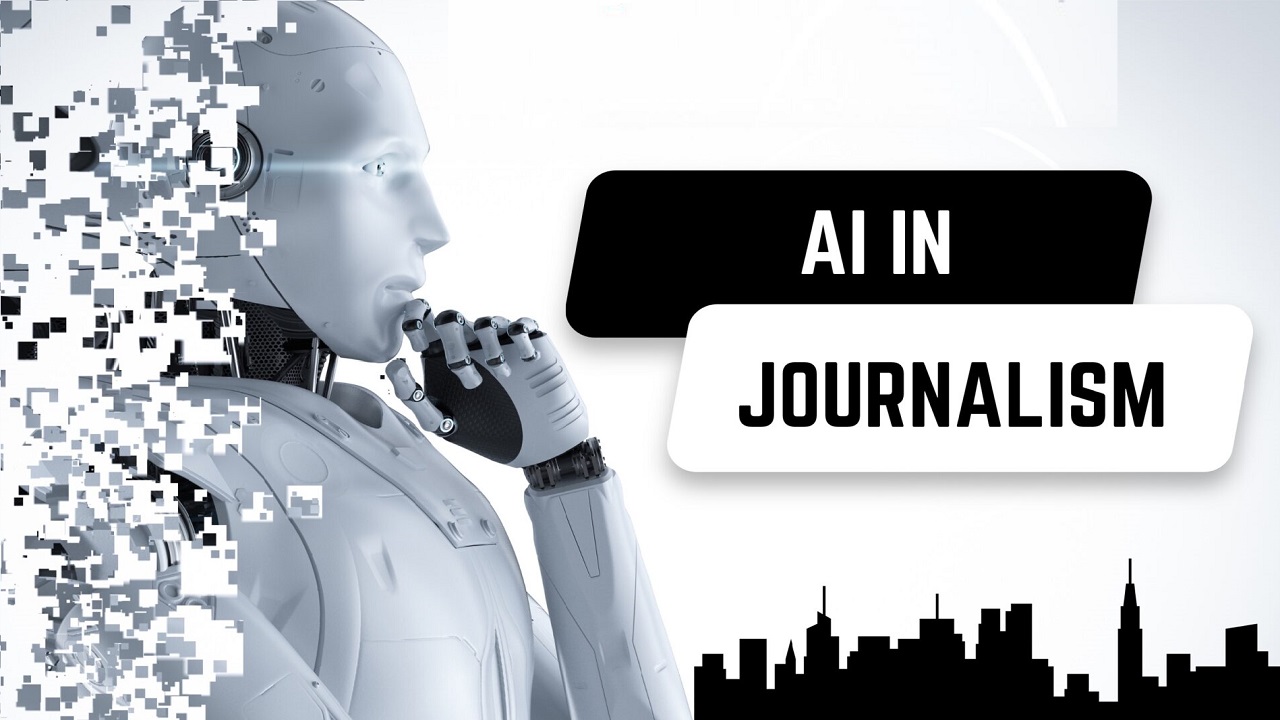
Last month, I was invited by Daily Post to keynote the 2025 annual retreat of its employees. The event took place on December 11, 2025. With weekly impressions totalling 15 million, Daily Post is one of the five leading online newspapers in Nigeria and a very defining actor in Nigeria’s emergent Fifth Estate. This post recalls my thoughts as evinced in the paper I presented at the forum with the same title.
As a conceptual note, I reckoned that Artificial Intelligence (AI), ostensibly perceived at the beginning as a science fiction, is the use of computer systems to do tasks that are ordinarily in the domain of human aptitude to do. The European Parliament which defines it as “the ability of machine to display human-like capabilities such as reasoning, learning, planning and creativity”, has since centralised AI as a necessity for the transformation of societies.
While AI has many kinds, I had adopted Google’s OpenAI notion that classification of AI is dictated by capability and functionality. In our field – communication management – the generative kind is more applicable, the most popular of that being ChatGPT (Generative Pre-Trained Transformer) but this generative type are legion and protean, and unbelievably shaping what we now understand as media, particularly in production, distribution and consumption of content.
On the other side of the coin, I noted that media, is simply a vehicle or means by which something is communicated or transmitted. So, it is an agency comprising several means by which information is mass-communicated, especially via broadcasting, textual publishing and of course through the Internet which has become the repository of all communication forms. I referenced Adidi Uyo, Blake and Haroldsen, DeFleur and Dennis, Wilbur Schramm and John Bittner to explain the disruption that has taken place in classifications and characteristics of media outlets but noted that media sociology (functions and responsibilities to society) remained largely unchanged.
I recalled Dapo Olorunyomi’s reasoning on what we have come to know as media and restated that media could mean a whole lot. From entertainment spoofs, to trivialities, creative advertising, top-notch public relations, a musical performance by Davido, a reality show like Big Brother, pornography, a stunt by Very Dark Man, and of course journalism. The very last here, journalism, was my concern when I spoke with the enthusiastic employees of Daily Post. As a student, teacher and practitioner of journalism, I was unequivocal that newspapering or media and journalistic enterprise is the informed, factual, investigative and interpretive reporting that strengthens social cooperation, engagement and development; as well as representative, participatory and popular democracy. In other words, without good journalism, democracy and social development is dead and buried.
I informed my audience that Prof. Joseph Stiglitz was going to speak on “The Road to Freedom: Economics and the Good Society” on January 15, 2026 at a public lecture in Tokyo on the auspices of the United Nations University, and he did a week ago. Stiglitz explored with renewed knowledge how to build societies that truly enhance “individual freedoms, democratic values and collective well-being.” The discourse brought to the fore what the media should project and promote. A good news media should be unrepentant in defending freedom, humanism and social development. The Fourth and the Fifth Estates must set social agenda around those themes. They must be preachy of and insist on accountability, set agenda for governance and illuminating the social fabric with factual, investigative, interpretive and courageous reporting underpinned by best standards in ethical journalistic crafting. I referred to the genre Dele Giwa and Bagauda Kaltho sacrificed their lives for and for which others have been maimed and stymied.
Authentic, professional and ethical news reporting should explore AI to reclaim its space and strengthen its role in sustaining society beyond the speed, pattern and sophistication in news production, circulation and consumption already conferred by new communication technologies.
I raised the banner of the journalistic media practiced by Ernest Ikoli, Obafemi Awolowo, Anthony Enahoro and others, whose forerunners include Herbert Macaulay, the reason he was demonised by the colonial government. The critical media for the advancement of human freedom, real democracy and the common good is the kind whose banner was raised consistently at the height of Nigeria’s authoritarianism by NewsWatch, TheNews, Tell, African Guardian, and African Concord newsmagazines, The Guardian, The Punch, Vanguard, etc. – a tradition now sustained and refined by Premium Times, Cable, Daily Post, News Central and many other news media operating in the era of AI without jettisoning professional ethics, investigation and interpretation that are at the heart of journalistic enterprise.
Then, I took a turn, detouring towards professionalism and ethical imperatives of journalistic media in the age of AI. I asserted that despite hyperconnectivity and the consequential influence of digital communication and disruptive technologies that birthed citizen journalism and mass self-communication, “not all media is journalism.” To be a journalist and to practice the art, you need knowledge – journalism is a profession and all professions have troves of literature forming body of knowledge to which subscribers to the profession must immerse themselves. So, there are entry level educational requirements that take life from pedagogical, empirical and experiential immersions. The latter is bolstered by upskilling and continuous knowledge-sharing processes such as the Daily Post retreat. Such didactic enables us to glean philosophical, theoretical, normative and other resources, including legal and ethical frameworks that underpin news reporting.
I emphasised that the journalist is a chronicler of history in a hurry but he must do so with the most scrupulous conscientiousness of honour. He is a communication manager, the only one in the communication management spectrum constitutionally charged to hold government accountable to the governed. He is an informer, interpreter, illuminator and therefore an educator. Suffice to say he must be thoroughly educated, as Marx had stated compellingly, “the educator must be educated”.
Importantly, because what the journalist does provides information the citizens require to enable them to take informed decisions, I advised that care must be taken to ensure that what is reported is truthful and factual. Therefore, the journalist cannot entirely rely on AI to write his story – AI can be probabilistic and more susceptible than humans to devastating errors, whereas news writers have professional, ethical and social obligations to ensure that the public is not harmed on account of their enterprise. Thus, journalists reporting crises and conflicts must not report in a way that endangers citizens or the soldiers working to strengthen safety, security and defence of citizens. To work in public interest is to adhere to this principle.
To be clear, the educational role of journalists is so central to the ability of citizens and the public to play their roles in ensuring proper governance of society. Walter Lippmann in ‘Public Opinion’ (1922) was clear about the importance of thorough education to the success of good public opinion. Journalists must be well-educated to be able to offer great knowledge that citizens require to make informed decisions about governance and democracy, Lippmann insisted, suggesting that where democracy is the organising principle, the crisis of society will be linked to the crisis of democracy; and the crisis of democracy is mostly rooted in or symptomatic of the crisis in journalism. This means that journalism would have failed in its social responsibility if unable to shape public education through robust narrations – opinions, news and interpretation that could brighten the social fabric.
To instantiate, I recalled the Code of Ethics of the Nigeria Union of Journalists (NUJ) which demands that all journalists must be truthful, accurate, fair, respect privacy, shun plagiarism, and defend the unity of the nation; as well as demand respect for “human rights, democracy and accountability.” Thus, the journalist should be independent, eschewing manipulation or influence by other actors in the social space because his duty is to protect the people from misgovernance and inappropriateness.
Today, while the deployment of AI-powered tools remains topical, germane and critical, especially in worsening human encounter with trust and truth as well as fake news, objectively, AI is not the real villain in the fake-news crisis. The real problem lies in how irresponsibly or carelessly AI tools are used. There is no gainsaying the fact that, it is the duty of all those in communication management practice (in this instance, the journalist) to ensure safe, ethical, thoughtful and responsible use of AI.
There is no doubt that AI has given misinformation a faster engine. Hence, anyone with zero technical knowledge can now generate a believable video, a cloned voice, a compromised text, or a fabricated statement in minutes. AI has been so weaponised that a lie can be mass-produced, translated, and amplified before a good communicator even finishes drafting a response.
However, here is the paradox. AI is also our strongest tool to fight the very fake news it enables to threaten good journalism. So, it is really good news that the same technology, the same innovation that creates synthetic content can also detect manipulation frame by frame, pixel by pixel, narrative by narrative. It can alert us to misinformation spikes, verify sources, and help us track the speed at which false narratives are spreading.
Accordingly, I told my audience to upskill knowledge and leverage the following AI tools for detecting fake or AI-Generated content.
- Sensitive AI – to detect Deepfakes, manipulated video/image; synthetic media detection. It is widely used in research and media verification.
- Deep Ware Scanner – for quick scan; for video/audio deepfakes. It is a free tool for initial checks – good for social media clips.
- Paravision (Deepfake Detection) – for face-swap or synthetic-face detection in video/image; identity fraud detection. It is a more enterprise/professional level tool used for media, customers, citizens and employees’ identity verification in predominantly digital contexts.
- Truth Lens AI-Powered Fake News (Misinformation) Detector – It analyses video or YouTube links to detect AI-generated manipulations using frequency/pixel-artifact analysis. It is a free online tool considered valuable for quick checks on suspicious videos, other audio-visual media and it is integrated into some platforms for real-time alerting.
- McAfee Deepfake Detector – This also detects AI-generated or manipulated audio/visual content.
- Browser Extensions, Like Deepfake Detector (Browser Extension) – This is often useful for real-time detection on social media (images, video, audio while browsing). It is convenient for journalists, public relations practitioners, researchers, especially for quick first check.
In totalising, journalists and other professionals in the communication management space need to upskill and learn about AI afresh, taking very conscious, intentional notes about how AI supports responsible, ethical and public interest journalism and communication management. The ability to spot fake news and misinformation rather than circulate them helps in professional news reporting and underscores the role of credible news media reportage in the service of individual freedom, democracy and common good.
No journalist should rely on AI to write news reports. AI is an assistant, a companion that can increase the tempo of news production, for instance, because of the availability of AI tools that can fact-check uncertainties and misrepresentations. Authentic, professional and ethical news reporting should explore AI to reclaim its space and strengthen its role in sustaining society beyond the speed, pattern and sophistication in news production, circulation and consumption already conferred by new communication technologies.
Decades ago, satellite publishing enabled the International Herald Tribune to produce variety of editions from different cities globally and simultaneously. Contemporary journalistic practices should leverage AI for impressive uptakes of that feat by International Herald Tribune. Journalism that supports public good should not be seen to be scapegoating, weaponizing and fetishizing AI in the manner companies are using AI “to cover up old-fashioned cost-cutting”.
As Jari Mattlar (2025) has curated, researchers at Oxford, MIT, Yale and others have continued to repudiate the AI disruption we all are freaking out about, “It is not happening on a mass scale”, Mattlar asserts in response to corporate governance. After all, as many of us will agree, misinformation has always been in the news media and public spaces before modern technologies of communication but professional journalists and adroit communication managers found ways to checkmate misinformation, reclaim the space and underscore the importance of news media and strategic communication.
READ ALSO:
Makinde, Mutfwang meet Tinubu at State House
Daily Trust Dialogue: APC national chair underscores party’s commitment to national engagement
Tinubu approves targeted incentives to unlock jobs, FX inflows from Shell’s Bonga Southwest project
MTN Foundation trains 2,000 youths, SMEs on digital skills
Amb Sarafa Isola pays condolence visit to Onabanjo family
NUDGOSA hosts national convention on Saturday, to unveil projects
Who’s that Nigerian youngster who said he’s greater than Fela?
Stock market extends upward trend with N6bn gain