

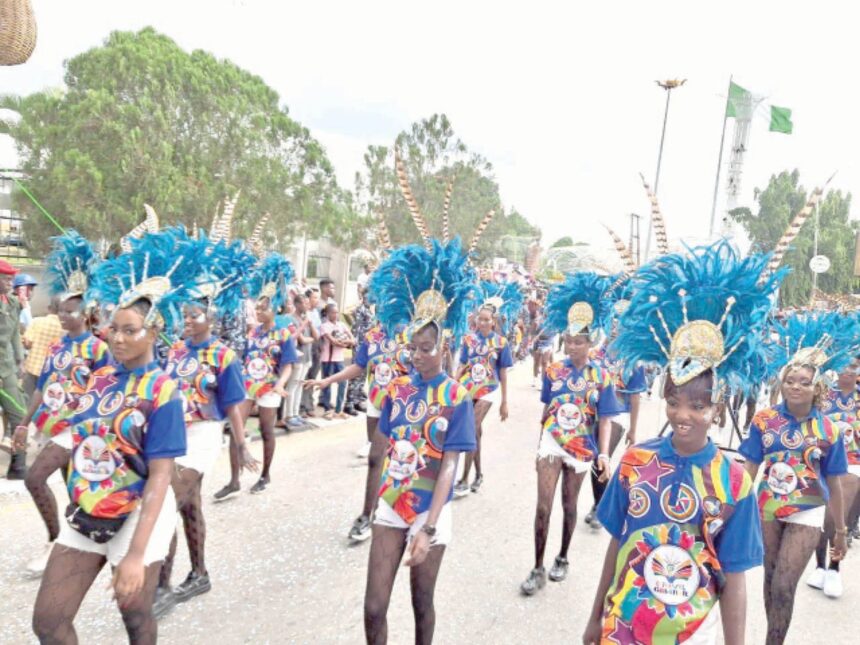
The 20th edition of the Carnival Calabar kicked off with a colourful cultural procession on Saturday at the Millennium Park, turning the streets of the Cross River capital into a festival of rhythm, colours and national pride.
The ceremony featured representatives of the state’s 18 local government areas.
Ikechi Uko, organiser of the Akwaaba African Travel and Tourism Market, said on the sidelines of the festivities that the entire carnival was deliberately designed to spotlight the rich traditions and cultural diversity of Cross River’s many tribes.
“Many confuse tradition with culture but they are not the same.
“Tradition is the living practice; culture is the broader identity,” he said.
Uko clarified that the ceremony, cultural carnival, that flagged off the carnival was the tradition.
He said the street carnival scheduled for December 29, was contemporary.
“The carnival is showcasing the culture of the people but the cultural carnival today is the traditional carnival.
“This is the one they got from their parents. The one you’re going to see on the 29th is the one they created for themselves,” he said.
Uko dismissed claims that the festival eroded heritage of the people, adding that the carnival was showcasing the culture of the people today.
He described the street parade as a cosmopolitan festival that had become a platform where people created and expressed their own identity.
The train moved from the park, routed through Marian Road to the Rabanna Roundabout, where the different groups showcased their culture and history before guests, dignitaries and public officials.
The atmosphere was electrifying with a mammoth crowd lining the streets.
It was also a family hangout – with children playing and dancing, and parents trying to keep them in check.
Traders were busy hawking snacks and street foods, and activities blaring through the public address systems, as dancers thrilled spectators.
One of the highlights was the contingent from Ikom local government area, led by its chairman, Mrs Mercy Nsor.
Groups from different states in the country, including Delta, Edo, Kebbi, Katsina, Rivers, Ebonyi, Niger, Nasarawa and Osun, also joined the procession.
The visiting groups also showcased their various cultures through food, music, dance and costumes.
As the sun set, the procession ended at about 8.00 p.m., and thereafter they moved from Rabanna to the U.J. Esuene Stadium for the final event of the day.
Source: NAN
READ ALSO:
CAN president in Aso Rock, tasks Tinubu on peace, security
Tinubu applauds $1.26bn landmark financing for Lagos-Calabar Coastal Highway
Sanwo-Olu unveils Eyo monument, reaffirms commitment to Lagos’ cultural identity
WEATHER FORECAST: NiMet predicts sunshine, cloudiness
Before Tinubu metamorphoses into another Donald Trump…
FG confirms US air strikes on terrorist target in Northwest
Trump announces US strikes on Islamic State targets in Nigeria
Gbajabiamila not replaced with Muri-Okunola -Presidency
Lagos tanker explosion kills two
Northern governors condemn Maiduguri mosque attack
Something small that could save you big trouble with tax come 2026